
IMPACT: 10-12 less Plastic Bags & Wrappers from going into the oceans & landfills!
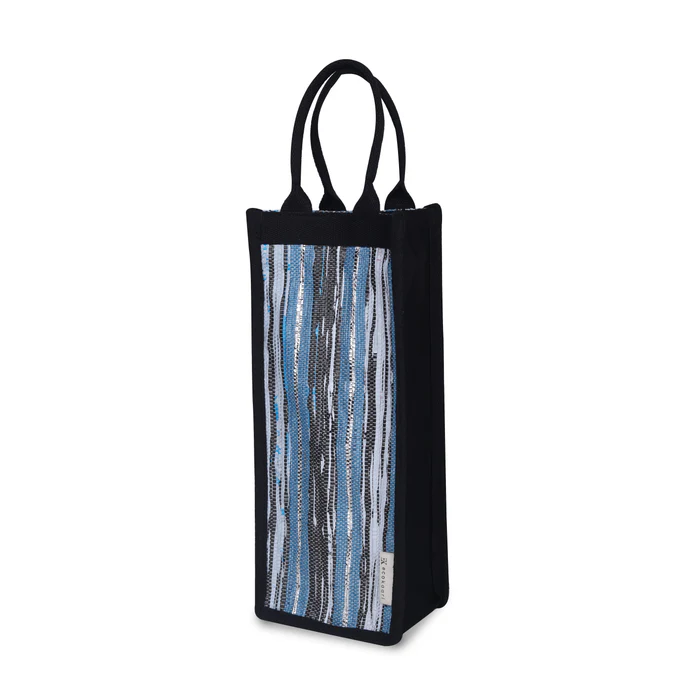
Looking for a fun and stylish way to carry your water bottle, display your wine, or gift one to your friends and family? The UPCYCLED-HANDCRAFTED
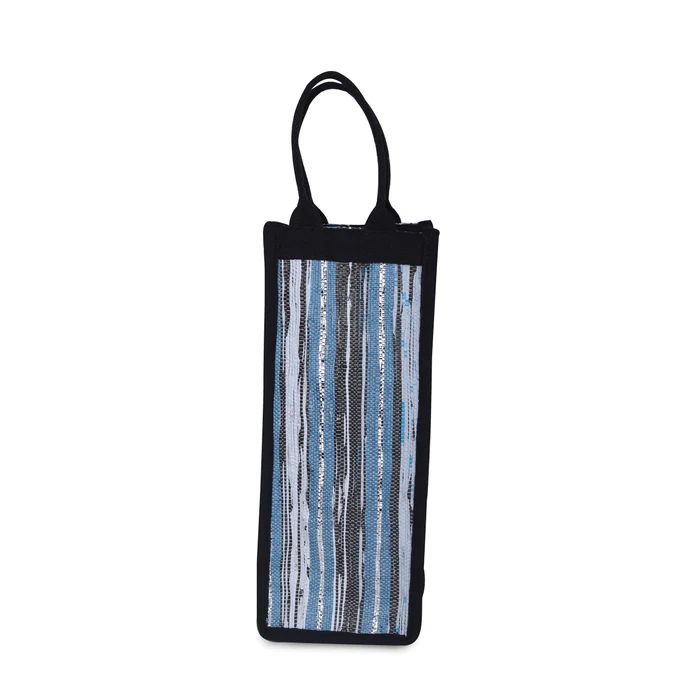
eco Bottle Cover is perfect as it instantly brings life into any setting. Easy to carry a 1-litre bottle with a comfortable cotton handle that you can hold in your hands.
- Color: Multicolored
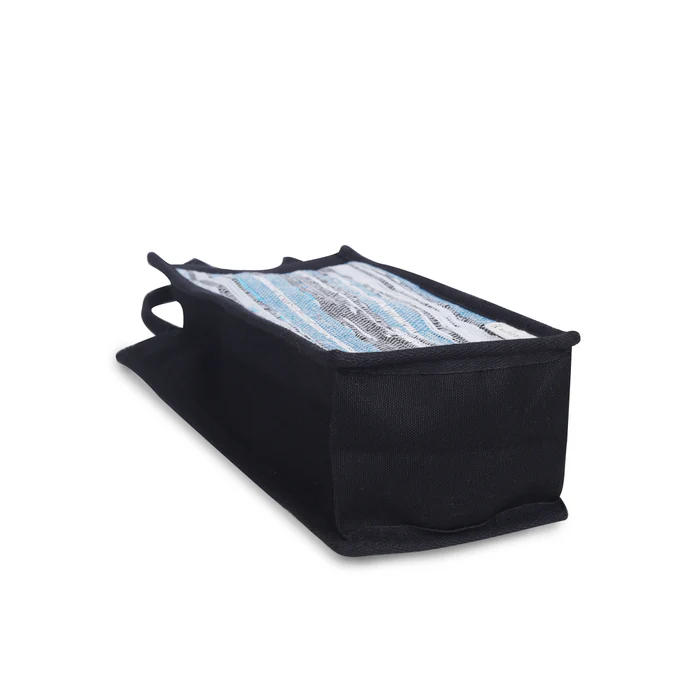
- Dimensions: 5" x 13" x 4” (w x h x base)
- Product Details: UPCYCLED-HANDCRAFTED fabric is made from waste plastic on the outside with cotton fabric as the inner lining and two handles.
No reviews yet. Be the first to review this product.
Ask a Question
Login to ask a question.
1. Material Use and Source
Sustainable Materials: The eco Water/Wine Bottle Cover is likely made from eco-friendly materials such as organic cotton, recycled polyester, or biodegradable fabrics. These materials are chosen for their reduced environmental impact compared to conventional options.
- Organic Cotton: Organic cotton is grown without synthetic pesticides and fertilizers, which reduces soil and water pollution. It also typically uses less water and energy in the cultivation process.
- Recycled Polyester: Made from post-consumer plastic bottles, recycled polyester reduces the demand for virgin petroleum and minimizes plastic waste.
Scientific Justification:
- Organic cotton farming emits fewer greenhouse gases than conventional cotton farming, primarily due to the absence of synthetic fertilizers and pesticides, which require significant energy to produce.
- Recycling plastic into polyester reduces the need for petroleum extraction and processing, which are energy-intensive and generate substantial CO2 emissions.
References:
- Textile Exchange. (2020). Organic Cotton Market Report.
- Shen, L., Worrell, E., & Patel, M. K. (2010). Open-loop recycling: A LCA case study of PET bottle-to-fibre recycling.
2. Production Processes
Efficient Manufacturing: The production of the eco Water/Wine Bottle Cover likely involves energy-efficient manufacturing processes, including the use of renewable energy sources and minimizing waste during production.
Scientific Justification:
- Using renewable energy sources such as solar or wind power reduces the carbon footprint of manufacturing by decreasing reliance on fossil fuels.
- Waste minimization in manufacturing reduces the amount of material that ends up in landfills and the emissions associated with waste decomposition and transportation.
References:
- International Renewable Energy Agency (IRENA). (2020). Renewable Power Generation Costs in 2019.
- McKinsey & Company. (2012). Manufacturing Resource Productivity.
3. Durability and Reusability
Long Lifespan: The eco Water/Wine Bottle Cover is designed for durability and long-term use, reducing the need for frequent replacements.
Scientific Justification:
- Products with a longer lifespan contribute to lower overall carbon footprints by reducing the frequency of manufacturing, transportation, and disposal cycles.
- Reusability decreases the demand for single-use products, which are typically more resource-intensive and generate more waste.
References:
- UNEP (2010). Assessing the Environmental Impacts of Consumption and Production: Priority Products and Materials.
- Allwood, J. M., et al. (2011). Material efficiency: A white paper. Resources, Conservation, and Recycling.
4. End-of-Life Disposal
Biodegradability and Recycling: The materials used in the eco Water/Wine Bottle Cover are either biodegradable or recyclable, ensuring minimal environmental impact at the end of the product's life.
Scientific Justification:
- Biodegradable materials break down naturally, reducing landfill waste and the associated methane emissions.
- Recycling materials help to close the loop, ensuring that resources are reused and reducing the need for virgin material extraction.
References:
- Hopewell, J., Dvorak, R., & Kosior, E. (2009). Plastics recycling: challenges and opportunities. Philosophical Transactions of the Royal Society B: Biological Sciences.
- Song, J. H., et al. (2009). Biodegradable and compostable alternatives to conventional plastics. Philosophical Transactions of the Royal Society B: Biological Sciences.
Offers
No offers available for this product at the moment.
Contact the vendor for bulk order pricing: EcoKaari
Please contact the vendor directly for their specific return and shipping policies.