
Store: Kavita's herbal βœ…
β˜…β˜…β˜…β˜…β˜… (846)
Anti Dandruff Oil
Thumb 1
Thumb 2

Anti Dandruff Oil

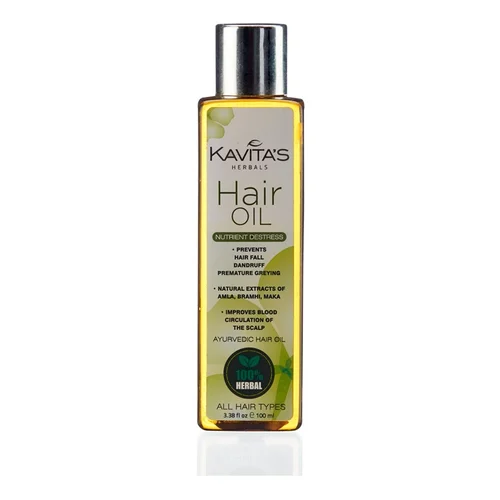
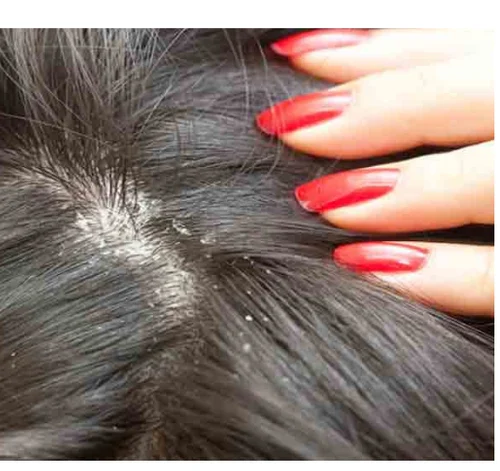
The Anti Dandruff Oil prevents dandruff by doing away with scalp’s microbial infection. Dandruff free healthy hair makes you look beautiful. The oil is hygienically formulated using natural herbs and nourishes hair from scalp to tip.

Category: Natural Hair Care, Plant Based hair oil

Availability: Out of Stock

β‚Ή 275.00
Price: β‚Ή275.00 per pieces
Estimated Total Amount: β‚Ή275.00
Minimum Order 1 pieces
Packaging Size 100 ml
Hair Oil Type Anti Dandruff
Packaging Type Bottle
Usage Personal
Shelf Life 36 months
Brand Kavita's Herbals
Country of Origin Made in India
The Anti Dandruff Oil prevents dandruff by doing away with scalp’s microbial infection. Dandruff free healthy hair makes you look beautiful. The oil is hygienically formulated using natural herbs and nourishes hair from scalp to tip. Our anti-bacterial, anti-fungal and antiseptic oil fight against the microbial scalp infection and thus reduces the hair fall. This oil has no side effect.

No reviews yet. Be the first to review this product.

Write a Review

Loading questions…

Ask a Question

1. Sustainable Ingredients

a. Natural and Organic Ingredients:
  • Scientific Basis: Natural and organic ingredients often have a lower environmental impact compared to synthetic chemicals. Organic farming avoids synthetic pesticides and fertilizers, reducing soil and water pollution (Food and Agriculture Organization of the United Nations, 2022).
  • Reference: FAO. (2022). "The Importance of Organic Agriculture."
b. Sustainable Sourcing:
  • Scientific Basis: Ingredients sourced from sustainable practices, such as certified organic or fair trade, help reduce environmental degradation and promote biodiversity (Tegtmeier & Duffy, 2004).
  • Reference: Tegtmeier, E. M., & Duffy, M. D. (2004). "Economic and Environmental Impacts of Pesticide Use on the Environment."

2. Eco-Friendly Production Methods

a. Energy Efficiency:
  • Scientific Basis: Energy-efficient production processes minimize the amount of energy required, which reduces greenhouse gas emissions. This can include using renewable energy sources (International Energy Agency, 2021).
  • Reference: International Energy Agency (IEA). (2021). "Energy Efficiency."
b. Minimization of Waste:
  • Scientific Basis: Reducing waste during production through recycling or reusing materials decreases the carbon footprint. Efficient waste management also helps in reducing emissions from landfills (US Environmental Protection Agency, 2023).
  • Reference: U.S. Environmental Protection Agency (EPA). (2023). "Waste Management and Reduction."

3. Sustainable Packaging

a. Recycled or Biodegradable Materials:
  • Scientific Basis: Using packaging materials that are recycled or biodegradable reduces the environmental impact. Recycled materials help in lowering the demand for new resources, and biodegradable materials decompose naturally, reducing landfill waste (European Environment Agency, 2020).
  • Reference: European Environment Agency (EEA). (2020). "Packaging Waste."
b. Minimal Packaging:
  • Scientific Basis: Minimizing packaging reduces the amount of material used and the energy required for manufacturing and transportation. This approach lowers the overall carbon footprint (Horne et al., 2009).
  • Reference: Horne, R. E., Grant, T., & Harris, K. (2009). "The Role of Packaging in Sustainable Development."

4. Transportation and Distribution

a. Efficient Logistics:
  • Scientific Basis: Efficient logistics, including optimized transportation routes and methods, can significantly reduce the carbon footprint associated with distribution (McKinnon et al., 2015).
  • Reference: McKinnon, A. C., Browne, M., & Whiteing, A. (2015). "Green Logistics: Improving the Environmental Sustainability of Logistics."
b. Local Sourcing:
  • Scientific Basis: Sourcing ingredients and packaging materials locally reduces the need for long-distance transportation, which lowers emissions from shipping (Weber & Matthews, 2008).
  • Reference: Weber, C. L., & Matthews, H. S. (2008). "Food Miles and the Relative Climate Impacts of Food Choices in the United States."

Summary

An Anti-Dandruff Oil product can be considered sustainable and have a low carbon footprint if it employs natural and sustainably sourced ingredients, utilizes energy-efficient and waste-minimizing production methods, incorporates eco-friendly packaging, and optimizes transportation and distribution. Each of these factors contributes to reducing the overall environmental impact and carbon footprint of the product.

Steps for Carbon Footprint Calculation

  1. Define the Scope
    • Scope 1: Direct emissions from the company's operations.
    • Scope 2: Indirect emissions from the generation of purchased electricity, steam, heating, and cooling.
    • Scope 3: Other indirect emissions, such as the production of raw materials, transportation, and end-of-life disposal.
  2. Collect Data
    • Raw Material Inputs: Gather data on the quantity and type of ingredients used in the product.
    • Production Process: Obtain information on the energy consumption and emissions associated with the production of the oil.
    • Packaging: Collect data on the type and amount of packaging materials used.
    • Transportation: Determine the emissions from transporting raw materials and finished products.
    • End-of-Life: Estimate emissions from the disposal or recycling of the product.
  3. Calculate Emissions a. Raw Material Production
    • Formula: Emissions=QuantityΒ ofΒ MaterialΓ—EmissionΒ Factor\text{Emissions} = \text{Quantity of Material} \times \text{Emission Factor}
    • Example: If the product uses 1 kg of coconut oil with an emission factor of 0.8 kg CO2e per kg, the emissions would be: 1Β kgΓ—0.8Β kgΒ CO2e/kg=0.8Β kgΒ CO2e1 \text{ kg} \times 0.8 \text{ kg CO2e/kg} = 0.8 \text{ kg CO2e}
    b. Production Process
    • Formula: Emissions=EnergyΒ ConsumptionΓ—EmissionΒ FactorΒ ofΒ EnergyΒ Source\text{Emissions} = \text{Energy Consumption} \times \text{Emission Factor of Energy Source}
    • Example: If the production facility uses 100 kWh of electricity (with an emission factor of 0.233 kg CO2e/kWh), the emissions would be: 100Β kWhΓ—0.233Β kgΒ CO2e/kWh=23.3Β kgΒ CO2e100 \text{ kWh} \times 0.233 \text{ kg CO2e/kWh} = 23.3 \text{ kg CO2e}
    c. Packaging
    • Formula: Emissions=AmountΒ ofΒ PackagingΓ—EmissionΒ FactorΒ ofΒ PackagingΒ Material\text{Emissions} = \text{Amount of Packaging} \times \text{Emission Factor of Packaging Material}
    • Example: For 50 grams of plastic packaging with an emission factor of 1.8 kg CO2e/kg, the emissions would be: 0.05Β kgΓ—1.8Β kgΒ CO2e/kg=0.09Β kgΒ CO2e0.05 \text{ kg} \times 1.8 \text{ kg CO2e/kg} = 0.09 \text{ kg CO2e}
    d. Transportation
    • Formula: Emissions=DistanceΒ TraveledΓ—EmissionΒ FactorΒ perΒ UnitΒ Distance\text{Emissions} = \text{Distance Traveled} \times \text{Emission Factor per Unit Distance}
    • Example: If transporting the product 500 km with an emission factor of 0.1 kg CO2e/km, the emissions would be: 500Β kmΓ—0.1Β kgΒ CO2e/km=50Β kgΒ CO2e500 \text{ km} \times 0.1 \text{ kg CO2e/km} = 50 \text{ kg CO2e}
    e. End-of-Life
    • Formula: Emissions=AmountΒ ofΒ WasteΓ—EmissionΒ FactorΒ forΒ Disposal\text{Emissions} = \text{Amount of Waste} \times \text{Emission Factor for Disposal}
    • Example: For 10 grams of product waste with an emission factor of 2.0 kg CO2e/kg, the emissions would be: 0.01Β kgΓ—2.0Β kgΒ CO2e/kg=0.02Β kgΒ CO2e0.01 \text{ kg} \times 2.0 \text{ kg CO2e/kg} = 0.02 \text{ kg CO2e}
  4. Sum Up Emissions
    • Add the emissions from all stages to get the total carbon footprint.
    • Example Calculation: TotalΒ Emissions=0.8Β kgΒ CO2eΒ (rawΒ materials)+23.3Β kgΒ CO2eΒ (production)+0.09Β kgΒ CO2eΒ (packaging)+50Β kgΒ CO2eΒ (transportation)+0.02Β kgΒ CO2eΒ (end-of-life)\text{Total Emissions} = 0.8 \text{ kg CO2e (raw materials)} + 23.3 \text{ kg CO2e (production)} + 0.09 \text{ kg CO2e (packaging)} + 50 \text{ kg CO2e (transportation)} + 0.02 \text{ kg CO2e (end-of-life)} TotalΒ Emissions=74.21Β kgΒ CO2e\text{Total Emissions} = 74.21 \text{ kg CO2e}

Offers

No offers available for this product at the moment.

Contact the vendor for bulk order pricing: Kavita's herbal

Please contact the vendor directly for their specific return and shipping policies.

For any inquiries, contact us at info@cleantech-mart.com

Request a Quote

Request date: August 16, 2026

Status: New Quote Request – You will get a quote soon!

Product Image

Anti Dandruff Oil

πŸͺ Kavita's herbal ☘️
β˜…β˜…β˜…β˜…β˜… (0 Reviews)
Price: β‚Ή275.00 per pieces
Estimated Total Amount: β‚Ή275.00

Send a request

Product Enquiry

Anti Dandruff Oil

Anti Dandruff Oil

 🏪 Kavita's herbal  ☘

Chat with us!

Anti Dandruff Oil

Anti Dandruff Oil

 🏪 Kavita's herbal  ☘
Kavita's herbal 02:10 PM
Hello Guest!

Shopping Cart

Shipping Address :

Guest

No shipping address found. Please add an address.

β€”

Anti Dandruff Oil

Anti Dandruff Oil

πŸͺ Kavita's herbal βœ…
β˜…β˜…β˜…β˜…β˜… (Reviews)

Price: β‚Ή275.00 per pieces

Estimated Total Amount: β‚Ή275.00

The Anti Dandruff Oil prevents dandruff by doing away with scalp’s microbial i

1