Sustainability Score
7/10
Carbon Footprint
Low
Low-Carbon Lifestyle Fit
Good
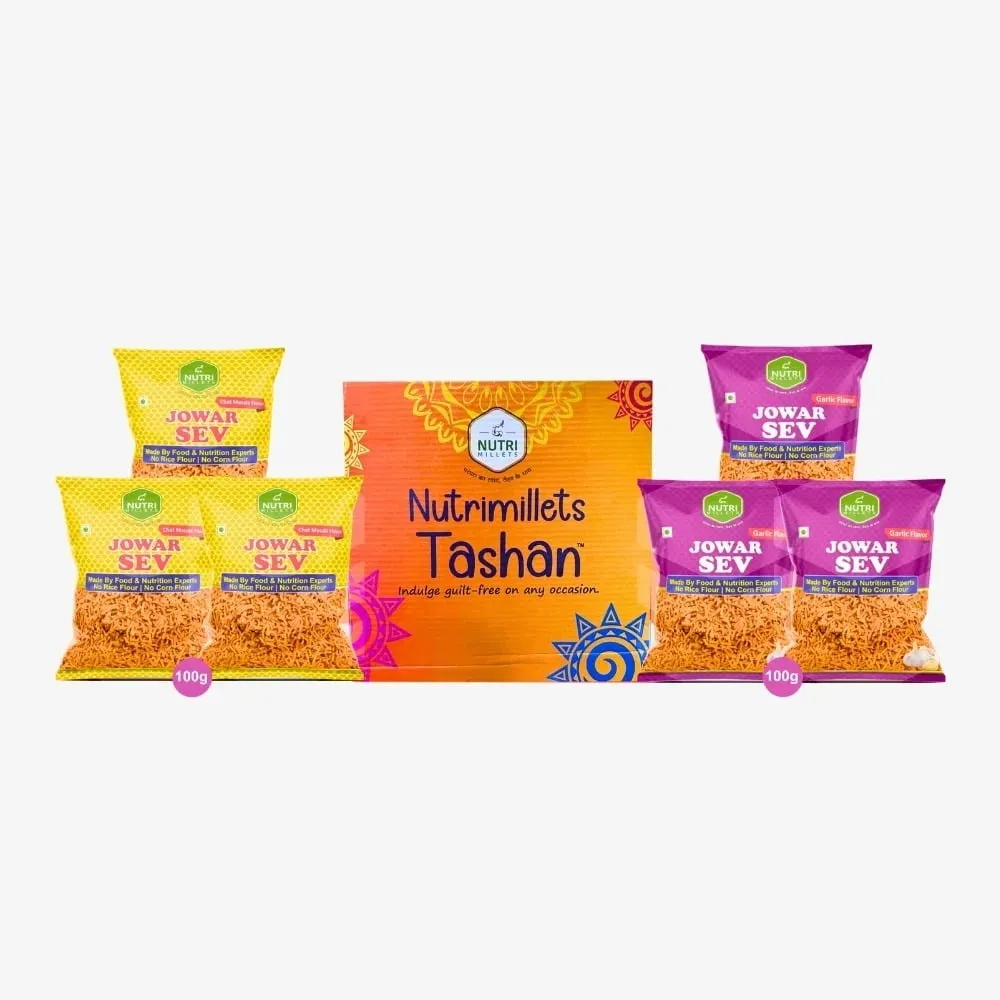
The Assorted Sev Combo primarily uses millets (Jowar) and legumes (moth beans, split gram flour) as raw materials, which are known for their lower water and carbon footprint compared to conventional grains like rice or wheat. Manufacturing involves processing and frying, which can be energy-intensive depending on the facility's power source. As a packaged food product, its lifespan is typically short to medium (a few months), and end-of-life disposal relies heavily on local waste management infrastructure for its packaging.
| Lifecycle Stage | Impact | Notes |
|---|
| Raw Materials | low | Millets and legumes are drought-resistant and require fewer inputs (water, fertilizers) than conventional grains, leading to lower agricultural emissions. |
| Manufacturing | medium | Processing (grinding, mixing, frying) requires energy, with the carbon impact depending on the energy mix of the production facility. |
| Packaging | medium | Likely uses multi-layer plastic pouches to maintain freshness, which are challenging to recycle in many Indian regions. |
| Transportation | low | Relatively low impact for a product of this weight and shelf life, assuming optimized logistics within India. |
| Usage Phase | minimal | No energy or water consumption required during the consumer usage phase. |
| End-of-Life | medium | Packaging, if non-recyclable or not properly disposed of, contributes to landfill waste and potential plastic pollution. |