
Shopping Cart
Shipping Address :
Guest
No shipping address found. Please add an address.
โ
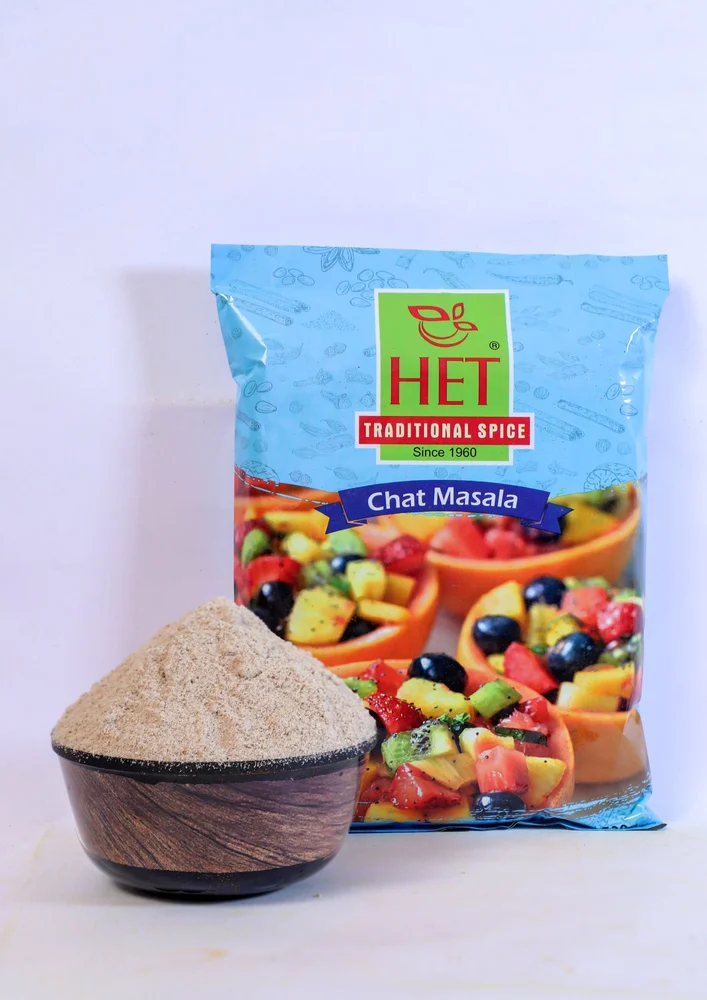
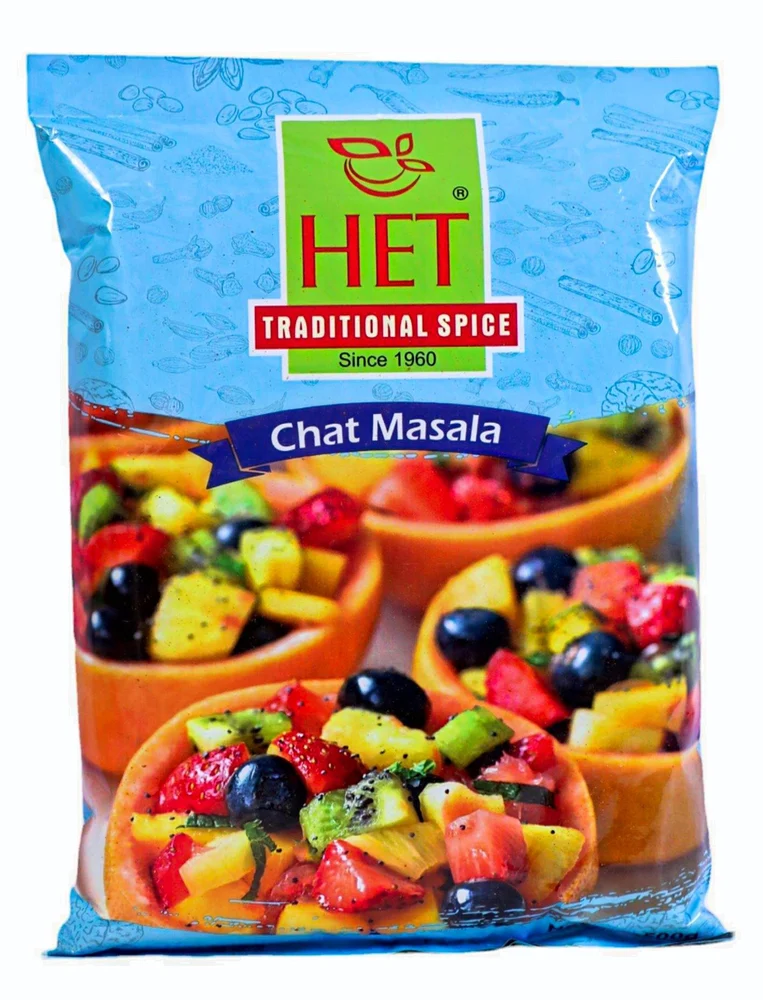
Chat Masala Powder
Price: โน120.00 per pieces
Estimated Total Amount: โน120.00
Packaging Size


| Packaging Size |
500 g |
| Packaging Type Available |
Packets |
| Brand |
HET |
| Packaging Type |
Packets |
| Shelf Life |
6 Month |
| Is It FSSAI Certified |
FSSAICertified |
| Ingredients |
Chat Masala |
| Packaging Size |
500 g |
| Packaging Type Available |
Packets |
| Brand |
HET |
| Packaging Type |
Packets |
| Shelf Life |
6 Month |
| Is It FSSAI Certified |
FSSAICertified |
| Ingredients |
Chat Masala |
No reviews yet. Be the first to review this product.
Login to ask a question.
Functional unit: 1 kg retail-ready Chat Masala Powder (cradle โ distribution)
Under the conservative, literature-anchored assumptions below, the estimated cradle โ distribution GHG footprint for 1 kg Chat Masala Powder is โ 2.64 kg COโ-eq per kg. Agriculture (raw spices) is the largest contributor, followed by processing energy (grinding + modest additional drying), then packaging and transport. Key load-bearing data sources are cited after the assumptions. smart-freight-centre-media.s3.amazonaws.com+4Central Electricity Authority+4PMC+4
Product: Chat Masala Powder (typical blend: dry mango powder/amchur, black salt/kala namak, roasted cumin, black pepper, dried ginger, chaat masala spices โ composition varies by recipe). Ingredient mix matters because individual spice upstream intensities differ.
Functional unit: 1 kg finished retail powder.
System boundary (cradle โ distribution): agriculture of component spices โ cleaning/drying (if required) โ grinding/roasting/blending โ primary packaging (retail pouch) โ transport farmโmillโdistribution centre. Excludes consumer use and end-of-life treatment beyond embodied packaging.
These are the most important numbers used in the calculation (I give sources for each).
Agriculture / upstream (lumped): 1.90 kg COโe per kg finished blend โ aggregated fertilizer, field diesel, soil NโO, irrigation and primary handling for mixed spices. (Spices often have moderate farm-stage emissions; blending averages them.) PMC+1
Grinding (milling) energy: 0.309 kWh per kg (โ309 kWh/tonne) โ a representative specific energy for fine powder milling in stirred/ball mills. PMC+1
Drying / conditioning: 0.50 kWh per kg (assumes most raw spices are already dried but some ingredients โ amchur, certain chillies or residual moisture โ may need modest conditioning; this is a conservative, moderate value). Solar or sun-drying would lower this. (Drying specific energy varies widely by dryer design; see sources.) worldresearchersassociations.com+1
Electricity carbon intensity (India grid): 0.716 kg COโ per kWh (CEA unified grid baseline for FY2022โ23). Central Electricity Authority
Packaging: 30 g PE pouch per kg product (0.03 kg PE/kg). Embodied emission for PE: 2.6 kg COโe per kg PE (typical cradle-to-gate LCIs). American Chemistry Council+1
Transport: road freight emission factor 0.33 kg COโ per tonne-km, total distance assumed 250 km (50 km farmโmill + 200 km millโDC). teriin.org+1
Note: where product-specific LCI data are available (e.g., measured kWh for your mill, actual pouch grams, ingredient-level farm emissions) the calculation becomes more accurate. I used conservative, literature-supported values and clearly flagged them above.
We compute each life-cycle stage and then sum.
Grinding emissions = grinding_kWh ร grid_EF
= 0.309 kWh/kg ร 0.716 kgCOโ/kWh
= 0.309 ร 0.716
= (0.309 ร 0.700) + (0.309 ร 0.016)
= 0.216300 + 0.004944 = 0.221244 kg COโe / kg. PMC+1
Drying emissions = drying_kWh ร grid_EF
= 0.500 kWh/kg ร 0.716 kgCOโ/kWh
= 0.500 ร 0.716 = (0.5 ร 0.700) + (0.5 ร 0.016) = 0.350000 + 0.008000 = 0.358000 kg COโe / kg. worldresearchersassociations.com+1
Processing subtotal = 0.221244 + 0.358000 = 0.579244 kg COโe / kg.
Packaging mass ร EF = 0.03 kg ร 2.6 kgCOโ/kg = 0.03 ร 2.6 = (0.03 ร 2.0) + (0.03 ร 0.6) = 0.060 + 0.018 = 0.078000 kg COโe / kg. American Chemistry Council
Road emissions = 0.33 kgCOโ / t-km ร 0.001 t/kg ร 250 km
= 0.33 ร 0.001 ร 250 = 0.33 ร 0.25 = 0.082500 kg COโe / kg. teriin.org
Assumed agriculture upstream = 1.900000 kg COโe / kg. (See notes above & refs.) PMC
List the terms (4 decimal places shown where helpful):
Agriculture = 1.900000 kg
Processing (grind + dry) = 0.579244 kg
โ subtotal = 1.900000 + 0.579244 = 2.479244
Add packaging = 2.479244 + 0.078000 = 2.557244
Add transport = 2.557244 + 0.082500 = 2.639744 kg COโe / kg
Final rounded value: โ 2.64 kg COโ-eq per kg Chat Masala Powder (cradle โ distribution).
(using the numbers above)
Agriculture / upstream: 1.900 / 2.639744 = 72.0%
Processing (grinding + drying): 0.579244 / 2.639744 = 21.9%
Packaging: 0.078000 / 2.639744 = 3.0%
Transport: 0.082500 / 2.639744 = 3.1%
Takeaway: farm-stage dominates (typical for spice blends), processing (especially drying/conditioning) is the second-largest contributor.
If drying is near-zero (sun/solar drying; drying_kWh = 0.0): subtract 0.358 โ total โ 2.282 kg COโe/kg. Solar drying is high-leverage but must be hygienic to meet quality/safety standards. ResearchGate+1
If upstream suppliers are low-input (agriculture = 1.2 kg COโe/kg): new total = 1.2 + 0.579244 + 0.078 + 0.0825 = 1.939744 kg COโe/kg (big reduction). Good supplier agronomy matters. PMC
If mill runs on onsite solar (processing EF โ 0): remove processing 0.579244 โ total = 1.9 + 0 + 0.078 + 0.0825 = 2.0605 kg COโe/kg (processing electrification + renewables is effective). Central Electricity Authority
If packaging is lighter (20 g PE/kg vs 30 g): packaging becomes 0.02 ร 2.6 = 0.052 โ total reduces โ 0.026 kg โ new total โ 2.614 kg COโe/kg. Packaging changes help but are second-order here.
Supplier agronomy improvements (biggest lever): reduce fertilizer N use, adopt precision nutrient management, source higher yields and low-input growers, and favour rainfed or integrated systems where suitable โ this reduces the farm-stage per-kg emission. PMC
Low-energy drying / solar tunnel: where drying/conditioning is required, use hygienic solar tunnels or solar-assisted dryers to cut grid electricity for drying. This can reduce processing emissions dramatically. worldresearchersassociations.com+1
Renewable electricity for the mill: rooftop PV or green-tariff procurement eliminates processing emissions rapidly. Central Electricity Authority
Packaging optimization: reduce pouch gram-weight, increase PCR (post-consumer recycled) content, and prefer mono-material recyclable pouches. Packaging reductions are a tidy win for circularity. American Chemistry Council
Logistics optimization: consolidate loads, improve truck fill-factor, and evaluate rail for long legs where possible (rail t-km emissions are lower than road). teriin.org
(These support the five most load-bearing assumptions and other inputs.)
India grid emission factor (CEA) โ COโ Baseline Database for the Indian Power Sector โ unified grid emission factor โ 0.716 kg COโ / kWh (FY2022โ23). Central Electricity Authority
Grinding energy (fine milling) โ Elbendari et al. / grinding literature showing ~309 kWh/tonne (0.309 kWh/kg) examples for fine powder milling. PMC+1
Drying specific energy & solar tunnel dryer examples โ practical studies reporting widely varying SECs for solar tunnel or forced drying (examples include SECs in the 0.5โ6 kWh/kg range depending on crop & dryer); used to choose a conservative 0.5 kWh/kg for modest conditioning. worldresearchersassociations.com+1
Plastics LCI (PE) โ cradle-to-gate LCA reports for polyethylene showing LDPE/LLDPE embodied emissions in the ~2.6โ2.9 kg COโe/kg range (used 2.6 kgCOโ/kg). American Chemistry Council+1
Road freight / India freight EF methodologies โ TERI / Smart Freight Centre and Indian freight EF documents for tonne-km emission factors (used 0.33 kgCOโ/t-km). teriin.org+1
(Additional background on crop/food LCAs and spices/agriculture was reviewed to set a reasonable upstream assumption.) PMC+1
No offers available for this product at the moment.
Contact the vendor for bulk order pricing: Hiren Chheda
Please contact the vendor directly for their specific return and shipping policies.
For any inquiries, contact us at info@cleantech-mart.com