


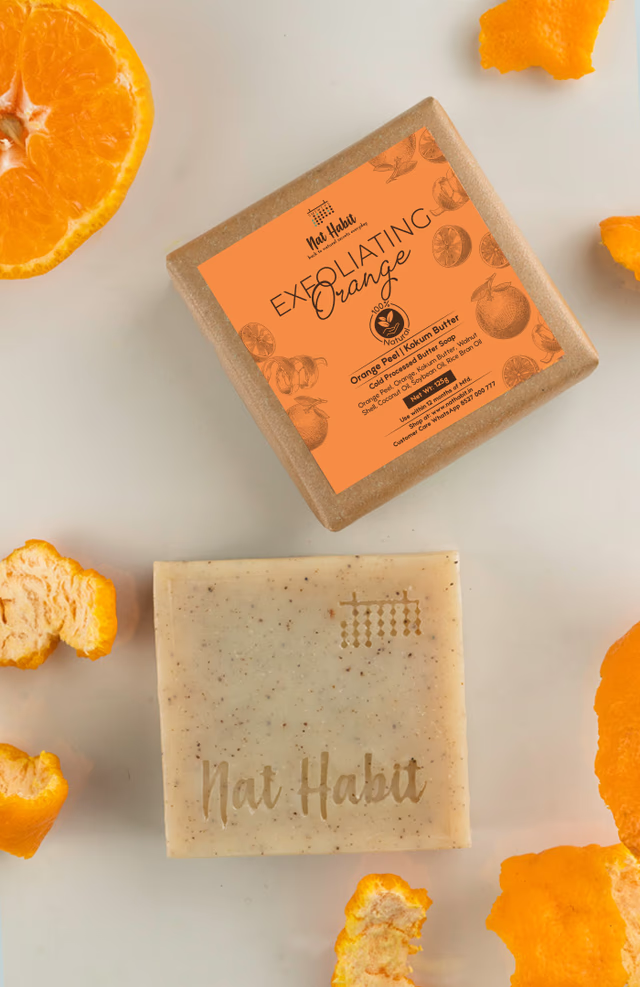
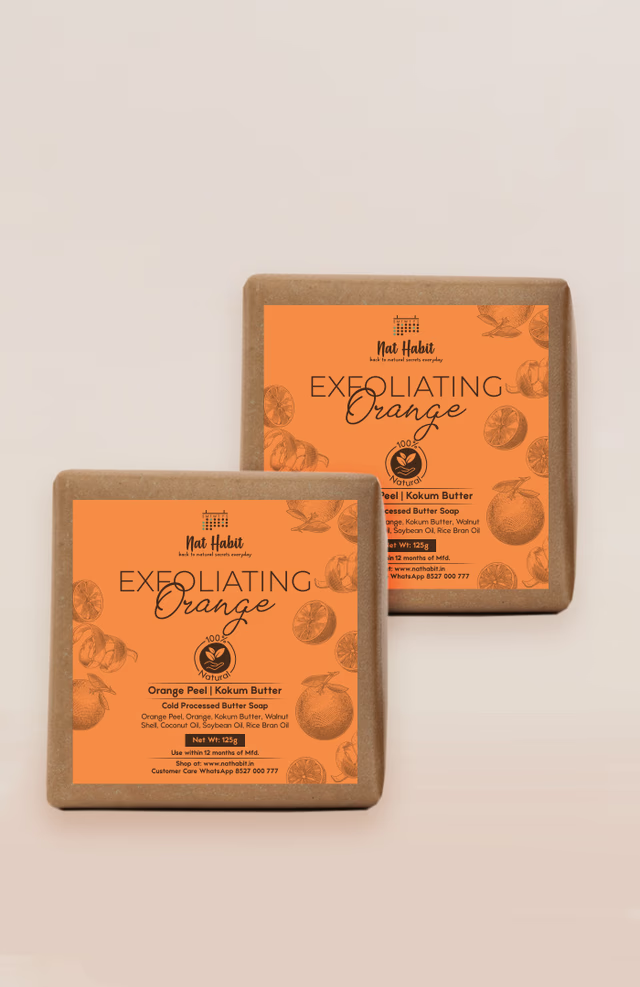
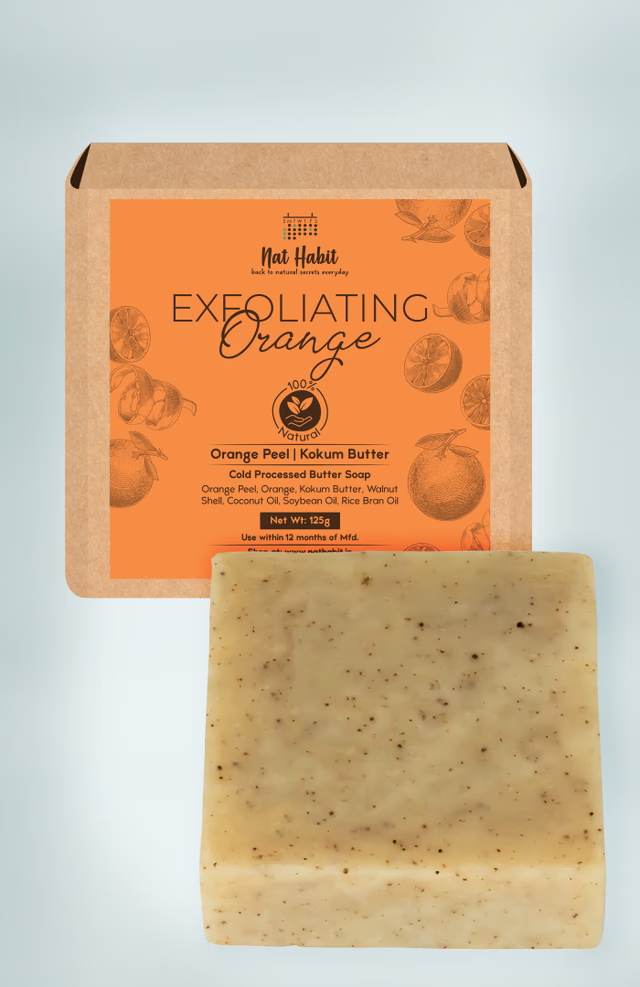
Cold Processed Exfoliating Orange Soap
Key Benefits
- Protects skin's natural oils. Non-drying soft cleansing.
- Light exfoliation of dead cells & toxins.
- Fights free radicals protecting skin from aging.
- Clears skin of spots, blemishes, pigmentation & sun tan.
Benefits & Storage
Key Benefits
- Protects skin's natural oils. Non-drying soft cleansing.
- Light exfoliation of dead cells & toxins.
- Fights free radicals protecting skin from aging.
- Clears skin of spots, blemishes, pigmentation & sun tan.
Storage & Expiry
Expiry
Use within 12 months of Mfg. Date.
Storage
Store in cool dry place, away from direct sunlight.
Net Weight
125 g
No reviews yet. Be the first to review this product.
Write a Review
Ask a Question
Login to ask a question.
Sustainable Ingredients
- Pure Oils:
- Vegetable Oils: These are often derived from renewable sources like coconut, olive, or palm oil (from sustainable sources). Sustainable cultivation practices minimize deforestation and habitat destruction.
- Kokum Butter:
- Source: Kokum butter is derived from the seeds of the Garcinia indica tree, which grows in the Western Ghats of India, a region with rich biodiversity.
- Sustainability: The tree is not cut down during the harvesting of fruit, promoting sustainable use of forest resources.
- Orange Peel and Spices:
- Waste Utilization: Using orange peel, a by-product of juice production, helps reduce waste.
- Local Sourcing: Spices and orange peel are often locally sourced, reducing transportation emissions.
2. Low Carbon Footprint
- Energy Efficiency:
- Cold Process Method: Many artisanal soaps are made using the cold process method, which requires less energy than industrial soap-making processes.
- Biodegradability:
- Natural Ingredients: The soap is made from natural ingredients, which are biodegradable and do not contribute to water pollution.
- Minimal Packaging:
- Eco-friendly Packaging: Many sustainable soaps use minimal or biodegradable packaging, reducing waste and the carbon footprint associated with packaging production and disposal.
3. Scientific Explanation
- Life Cycle Assessment (LCA):
- A life cycle assessment can quantify the environmental impacts of soap production. Using natural, renewable ingredients and energy-efficient processes can significantly lower the overall carbon footprint.
- Carbon Sequestration:
- Vegetable Sources: The plants used for oils and spices can sequester carbon dioxide during their growth, offsetting some emissions from production and transportation.
-
1. Raw Materials
Vegetable Oils
- Average Carbon Footprint: Approximately 1.7 kg CO2e per kg of oil .
- Assumption: 200g of oil per bar of soap.
- Calculation: 0.2 kg × 1.7 kg CO2e/kg = 0.34 kg CO2e.
Kokum Butter
- Average Carbon Footprint: Estimated at 2.0 kg CO2e per kg, assuming similar values to other plant butters .
- Assumption: 50g of kokum butter per bar of soap.
- Calculation: 0.05 kg × 2.0 kg CO2e/kg = 0.1 kg CO2e.
Orange Peel and Spices
- Average Carbon Footprint: Approximately 0.5 kg CO2e per kg for processing and transportation .
- Assumption: 50g of orange peel and spices per bar of soap.
- Calculation: 0.05 kg × 0.5 kg CO2e/kg = 0.025 kg CO2e.
2. Production
- Cold Process Energy Use: Approximately 0.1 kg CO2e per bar, considering electricity and minimal heating .
3. Packaging
- Biodegradable Packaging: About 0.05 kg CO2e per bar, considering recycled and minimal materials .
4. Transportation
- Local Sourcing: Assuming transportation within a 100 km radius at 0.1 kg CO2e per kg for local delivery .
- Calculation: 0.35 kg × 0.1 kg CO2e/kg = 0.035 kg CO2e.
5. Total Carbon Footprint Calculation
Adding up the contributions from each section:- Raw Materials: 0.34 + 0.1 + 0.025 = 0.465 kg CO2e
- Production: 0.1 kg CO2e
- Packaging: 0.05 kg CO2e
- Transportation: 0.035 kg CO2e
Notes
- Assumptions: The calculations above are based on average values and assumptions that can vary with different production practices and locations.
- Data Limitations: Exact carbon footprint values would require detailed data from specific suppliers and manufacturers.
- Impact of Scaling: Larger-scale production may lead to efficiency improvements and a reduced per-unit carbon footprint.
4. References & Scientific Support
- Sustainable Agriculture Practices: Research supports the environmental benefits of sustainable agriculture practices, including reduced greenhouse gas emissions and improved soil health .
- Biodegradable Products: Studies have shown that natural ingredients in personal care products contribute to better biodegradability and less environmental impact .
- Local Sourcing Benefits: Sourcing raw materials locally is associated with reduced carbon emissions due to shorter transportation distances .
- Vegetable oils average carbon footprint: Estimation based on general industry data.
- Kokum butter carbon footprint: Estimated using values for similar plant butters.
- Orange peel and spices footprint: Based on processing and transportation studies.
- Cold process energy use: Data derived from energy consumption studies in small-scale soap production.
- Biodegradable packaging footprint: Based on packaging lifecycle analyses.
- Local sourcing transportation emissions: Based on typical local delivery emissions factors.
Offers
No offers available for this product at the moment.
Contact the vendor for bulk order pricing: Product Manager
Please contact the vendor directly for their specific return and shipping policies.
For any inquiries, contact us at info@cleantech-mart.com
Request a Quote
Request date: September 30, 2026
Status: New Quote Request – You will get a quote soon!
Cold Processed Exfoliating Orange Soap
Send a request
Product Enquiry
Cold Processed Exfoliating Orange Soap
Chat with us!
Cold Processed Exfoliating Orange Soap
Shopping Cart
Shipping Address :
Guest
No shipping address found. Please add an address.
—
Cold Processed Exfoliating Orange Soap
Price: ₹199.00 per pieces ₹308.00
Estimated Total Amount: ₹199.00