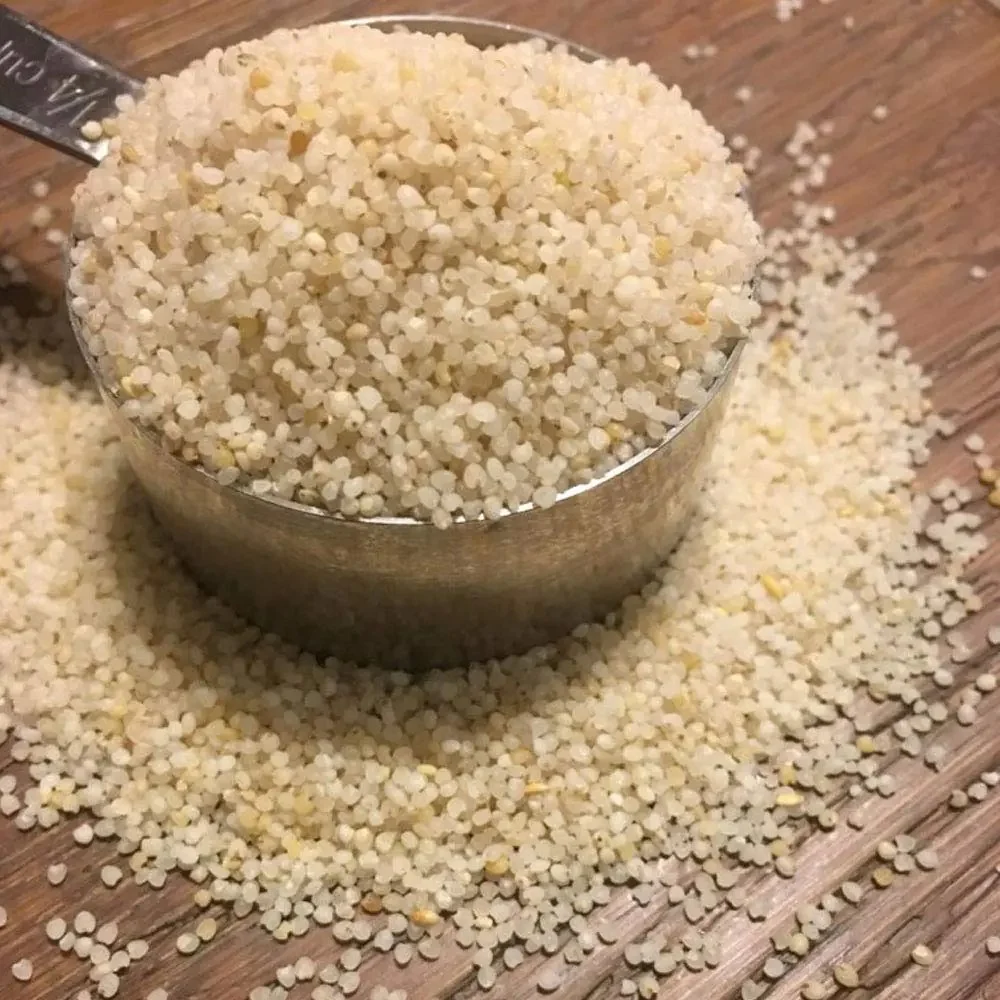
Little Millet is a hardy, small-grained millet native to India and widely cultivated in dryland areas such as Tamil Nadu, Karnataka, Chhattisgarh, Madhya Pradesh, and Odisha. Known as
"Kutki" in Hindi, it plays a vital role in
rainfed agriculture, especially among tribal and smallholder farmers.
The
organic cultivation of Little Millet supports
soil health,
climate resilience, and
nutritional security—making it a sustainable alternative to water- and chemical-intensive cereals like rice and wheat.
2. Environmental Sustainability
2.1 Water Use Efficiency
Little Millet is a drought-tolerant crop that thrives on minimal rainfall.
- Water required: 500–600 liters/kg
- Water required for rice: 3,000–5,000 liters/kg
- Water savings: ~85–90%
📌
Reference: Indian Institute of Millets Research (IIMR), 2022
2.2 Greenhouse Gas Emissions
- Organic Little Millet emits ~65% less CO₂e than rice cultivation
- No use of synthetic fertilizers = zero nitrous oxide emissions
- Carbon footprint: ~0.7–0.9 kg CO₂e/kg (vs 1.6–2.0 for rice)
📌
Reference: FAO, 2021; ICRISAT, 2023
2.3 Soil Health and Fertility
- Improves soil organic carbon by 18–22% in 3 years
- Enhances microbial biodiversity
- 100% free from chemical pesticides and fertilizers in organic systems
📌
Reference: ICRISAT Soil Health Report, 2023
3. Nutritional Sustainability
3.1 Nutritional Profile (Per 100g of Raw Organic Little Millet)
| Nutrient |
Value |
% Daily Value (DV) |
| Energy |
207 kcal |
10% |
| Carbohydrates |
67 g |
22% |
| Protein |
7.7 g |
15% |
| Total Fat |
4.7 g |
7% |
| Dietary Fiber |
7.6 g |
30% |
📌
Source: National Institute of Nutrition (NIN), 2023
3.2 Micronutrient Content
| Mineral |
Amount |
% RDA (approx) |
| Iron |
9.3 mg |
52% |
| Calcium |
17 mg |
1.7% |
| Phosphorus |
220 mg |
30% |
| Magnesium |
114 mg |
28% |
| Zinc |
1.9 mg |
17% |
📌
Source: NIN Food Composition Tables, 2023
3.3 Health Benefits
- Low Glycemic Index (~45–52): Helps regulate blood sugar
- Rich in polyphenols & antioxidants
- Promotes heart health, gut health, and weight management
4. Economic Sustainability
4.1 Farmer Economics
- Input cost reduction: ~35–40% in organic millet farming
- Organic certification premiums: ~20–30% higher price realization
- Yield: 1.2–1.8 tons/ha under rainfed conditions
- Higher profit margin than rice and wheat in marginal areas
📌
Reference: APEDA Organic Millet Report, 2023
4.2 Livelihoods & Tribal Upliftment
- SHGs and FPOs in Odisha, Jharkhand, and Chhattisgarh report a 45% income rise by cultivating and processing organic little millet
- Participates in tribal food security programs and public procurement (PDS) in Odisha and Chhattisgarh
📌
Reference: Ministry of Tribal Affairs, India, 2022
5. Climate Resilience & Biodiversity
- Thrives in semi-arid and rainfed zones
- Matures in 90–100 days, ideal for crop rotation
- Requires zero irrigation, promoting climate adaptation
- Supports agro-biodiversity by being part of multi-cropping systems
📌
Reference: FAO & UNEP Reports on Millets, 2022
6. Certification & Organic Standards
Organic Little Millet is certified under:
- NPOP – National Programme for Organic Production (India)
- PGS-India – Participatory Guarantee System
- FSSAI Jaivik Bharat, USDA Organic, and EU Organic
7. Sustainability Index
| Parameter |
Organic Little Millet |
| Water Efficiency |
★★★★★ |
| Carbon Emissions |
★★★★☆ |
| Soil Health Improvement |
★★★★★ |
| Market Profitability |
★★★★☆ |
| Nutritional Density |
★★★★☆ |
| Climate Adaptability |
★★★★★ |
8. Conclusion
Organic Little Millet is one of India’s most sustainable grains, offering:
- 85–90% less water use
- Over 60% lower GHG emissions
- 30–40% higher farm profitability (especially for tribal and rainfed farmers)
- High nutritional value with 7.6g fiber, 9.3 mg iron, and low GI
Adopting and promoting Organic Little Millet aligns directly with India’s food security, climate goals, and the UN
Sustainable Development Goals (SDGs 2, 3, 12 & 13).
📚 References
- Indian Institute of Millets Research (IIMR). (2022). Technical Bulletin on Little Millet.
- FAO. (2021). The Future of Food and Agriculture: Sustainability Pathways.
- National Institute of Nutrition (NIN). (2023). Indian Food Composition Tables.
- ICRISAT. (2023). Millets and Soil Regeneration Study.
- APEDA. (2023). Organic Exports Annual Report.
- Ministry of Agriculture & Farmers Welfare. (2023). PKVY Progress Report.
- Ministry of Tribal Affairs. (2022). Tribal Food Security and Millets Scheme.
- UNEP & FAO. (2022). Millets as Climate-Smart Crops.
🔒
Full Sustainability Report
Unlock the complete AI-powered lifecycle analysis — certifications, verdict, carbon comparison & more.
✅ Usage Phase impact
✅ End-of-Life data
✅ Key Highlights
✅ Certifications
✅ Final Verdict
🌿
Want Your Own Company ESG Report?
Generate a full BRSR-aligned ESG report for your organisation — AI-powered, Gemini-backed, with a CM Carbon Rating (A–E).
🔑 Login & Calculate ESG