
Shopping Cart
Shipping Address :
Guest
No shipping address found. Please add an address.
β
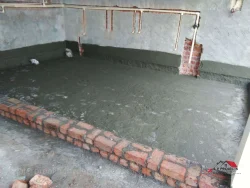
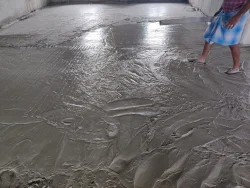
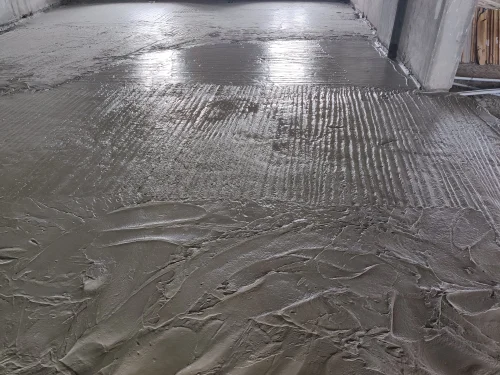
Light Weight Floor Filling Material
Price: βΉ5,500.00 per pieces
Estimated Total Amount: βΉ5,500.00


| Minimum Order Quantity | 10 Cubic Meter |
| Available Service | kerala |
| Concrete Setting Time | 6 hrs |
| Service Location City | tamilnadu |
| Specific surface area | light weight filling areas |
| Country of Origin | Made in India |
| Packaging Type | filling |
| Usage/Application | Construction |
Foamed concrete typically consists of a slurry of cement orΒ fly ashΒ and sand and water, although some suppliers recommend pure cement and water with the foaming agent for very lightweight mixes.Β This slurry is further mixed with a synthetic aeratedΒ foamΒ in aΒ concrete mixing plant.Β The foam is created using aΒ foaming agent, mixed with water and air from a generator. The foaming agent must be able to produce air bubbles with a high level of stability, resistant to the physical andΒ chemicalΒ processes of mixing, placing and hardening.
Foamed concrete mixture may be poured or pumped into moulds, or directly into structural elements. The foam enables the slurry to flow freely due to theΒ thixotropicΒ behaviour of the foam bubbles, allowing it to be easily poured into the chosen form or mouldΒ The viscous material requires up to 24 hours to solidify (or as little as two hours ifΒ steamΒ cured with temperatures up to 70Β Β°C to accelerate the process., depending on variables including ambient temperature and humidity. Once solidified, the formed product may be released from its mold. A new application in foam concrete manufacturing is to cut large concrete cakes into blocks of different sizes by a cutting machine using special steel wires. The cutting action takes place before the concrete has fully cured.
No reviews yet. Be the first to review this product.
Login to ask a question.
Renewable Material Cellular Lightweight Concrete (RMCLC) is a type of concrete that incorporates renewable materials to reduce its environmental impact. The sustainability of RMCLC depends on several factors, including the specific materials used, production methods, and end-of-life considerations. Here are some key points to consider:
Renewable materials: RMCLC incorporates renewable materials such as agricultural waste (rice husk, sugarcane bagasse, etc.), industrial by-products (fly ash, silica fume), and recycled materials (crushed glass, recycled aggregates). The use of these materials reduces the demand for virgin resources, promotes waste diversion, and lowers the overall carbon footprint.
Energy efficiency: RMCLC typically requires less energy during production compared to traditional concrete. The lightweight nature of the material reduces the amount of cement needed, resulting in lower energy consumption during mixing, transportation, and placement.
Reduced carbon emissions: The use of industrial by-products and recycled materials in RMCLC can help reduce carbon emissions. By replacing a portion of cement with fly ash or silica fume, the carbon footprint of the concrete is lowered. Additionally, the lightweight nature of RMCLC reduces the energy required for transportation, thereby further reducing carbon emissions.
Thermal insulation properties: RMCLC exhibits good thermal insulation properties, which can contribute to energy efficiency in buildings. It helps in reducing heating and cooling requirements, leading to lower energy consumption over the building's lifespan.
Durability and longevity: The long-term durability of RMCLC depends on various factors, including the quality of materials, mix design, and construction practices. Proper design and construction techniques are crucial to ensure the longevity and performance of the concrete. A durable material reduces the need for frequent repairs or replacement, contributing to sustainability.
Recycling and reuse: At the end of its lifespan, RMCLC can be crushed and used as aggregate in new concrete or for other construction purposes. This recycling potential minimizes waste and extends the useful life of the material.
It's important to note that the sustainability of RMCLC also depends on local factors such as the availability of renewable materials, regional construction practices, and waste management infrastructure. Life cycle assessments (LCAs) can provide a more comprehensive evaluation of the environmental impacts of RMCLC by considering all stages, from raw material extraction to end-of-life disposal.
Overall, when properly designed and implemented, Renewable Material Cellular Lightweight Concrete can be a sustainable alternative to traditional concrete, contributing to reduced carbon emissions, resource conservation, and improved energy efficiency.
No offers available for this product at the moment.
Contact the vendor for bulk order pricing: Shreeshabuilding
Please contact the vendor directly for their specific return and shipping policies.
For any inquiries, contact us at info@cleantech-mart.com