

Shopping Cart
Shipping Address :
Guest
No shipping address found. Please add an address.
—
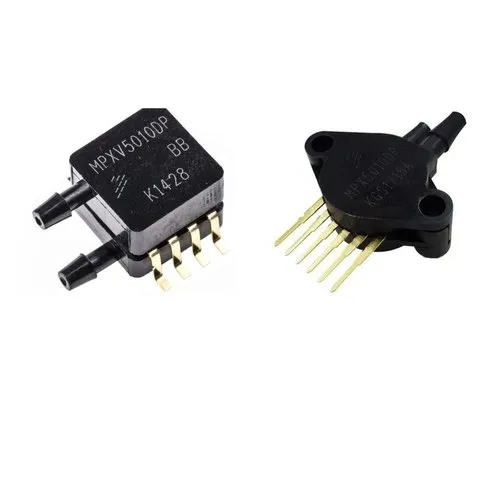
MPX / MPXV Series Pressure Sensor
Price: ₹350.00 per pieces
Estimated Total Amount: ₹350.00

| Temperature | -20 C to 85 C |
| Supply Voltage | 16 VDC |
| Brand | NXP |
| Pressure Ranges | 0 ~ 10 Kpa |
| Supply Current | 6.0 mAdc |
| Humidity | 0% to 95% RH |
| Operating Pressure | 1 psi to 150 psi |
Our very large pressure sensor portfolio contains a wide variety of pressure ranges, diverse packaging and porting options. These MEMS-based pressure sensors provide robust solutions for the appliance, medical, consumer, industrial and automotive markets.
Products | Interface | Target Applications |
Battery Pressure Monitoring Sensors NEWLow power consumption | SPI, PWM, Ready/Interrupt, Power Supply Enable | Traction (EV) battery over-pressure warning |
Barometric Pressure 15 to 150 kPaCalibrated, Temperature compensated and Amplified | SPI, I2C, Analog | Altimeter |
Absolute (barometric), LPG and CNG Gas 20 to 550 kPaCalibrated, Temperature compensated and Amplified | SPI, I2C, Analog | Engine Control |
Differential/Gauge up to 10 kPaAccurate Analog Output Signal | Analog | Medical Ventilator |
Differential/Gauge up to 115 kPaAccurate Analog Output Signal | Analog | Blood Pressure |
Differential/Gauge up to 1000 kPaAccurate Analog Output Signal | Analog | Industrial Controls |
Tire Pressure Monitoring SensorsLow-power Consumption | GPIO, RF, LF | Tire pressure monitoring systems |
Vacuum Sensors –50 to –115 kPaMedical Applications of all Kinds | Analog | Industrial Controls |
No reviews yet. Be the first to review this product.
Login to ask a question.
Sensors have the potential to greatly enhance the sustainability of agricultural farming practices. By providing real-time data and insights, sensors can optimize resource usage, reduce waste, and improve overall efficiency. Here are some ways in which sensors contribute to agricultural sustainability:
Precision agriculture: Sensors enable precision agriculture techniques, such as variable rate application of fertilizers, pesticides, and water. By monitoring soil moisture, nutrient levels, and crop health, sensors can precisely deliver inputs only where and when they are needed, minimizing environmental impact and reducing the use of chemicals and water.
Water management: Water scarcity is a significant concern in agriculture. Sensors can measure soil moisture levels, weather conditions, and crop water needs, allowing farmers to efficiently manage irrigation. By avoiding overwatering, sensors help conserve water resources and minimize the energy required for pumping and distribution.
Disease and pest management: Sensors can detect early signs of plant diseases and pest infestations, enabling timely intervention. This targeted approach helps reduce the use of pesticides by applying them only when necessary, minimizing their impact on the environment and beneficial organisms.
Yield optimization: Sensors can monitor crop growth parameters such as temperature, humidity, and light intensity. By collecting data on environmental conditions, farmers can optimize crop yields by adjusting planting schedules, managing microclimates, and employing other strategies to create ideal growing conditions.
Energy efficiency: Sensors can be used to monitor energy usage in agricultural operations, such as irrigation systems, machinery, and greenhouse environments. By identifying energy inefficiencies and optimizing equipment usage, farmers can reduce energy consumption and associated greenhouse gas emissions.
Soil health monitoring: Sensors can measure soil parameters like pH, nutrient content, and organic matter levels. This data helps farmers make informed decisions about soil management practices, such as nutrient application and soil conservation techniques, promoting soil health and reducing the need for excessive fertilization.
Livestock monitoring: Sensors can be used in livestock farming to monitor animal health, behavior, and environmental conditions in real time. By detecting signs of distress or illness early on, farmers can provide prompt care, minimize disease spread, and improve animal welfare.
While sensors offer numerous benefits for sustainable agriculture, their implementation may face challenges related to cost, connectivity, data management, and farmer training. Overcoming these obstacles and promoting access to sensor technologies can contribute to a more sustainable and productive future for agricultural farming.
No offers available for this product at the moment.
Contact the vendor for bulk order pricing: SourcewellDevicesPrivateLimited
Please contact the vendor directly for their specific return and shipping policies.
For any inquiries, contact us at info@cleantech-mart.com