Sustainability Score
8/10
Carbon Footprint
Low
Low-Carbon Lifestyle Fit
Excellent
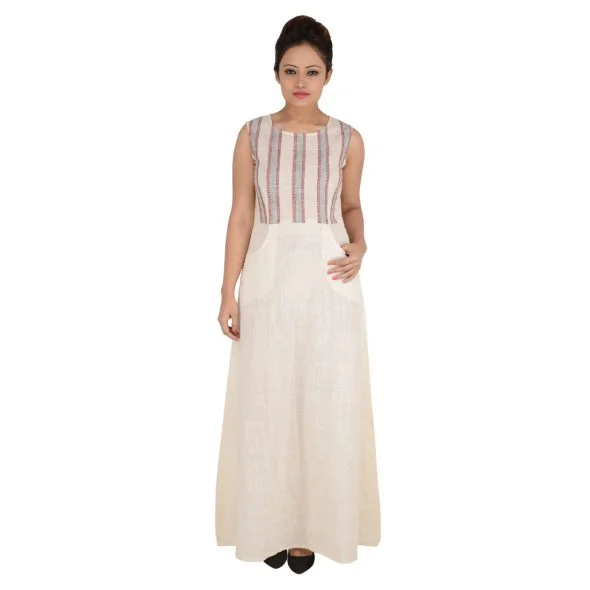
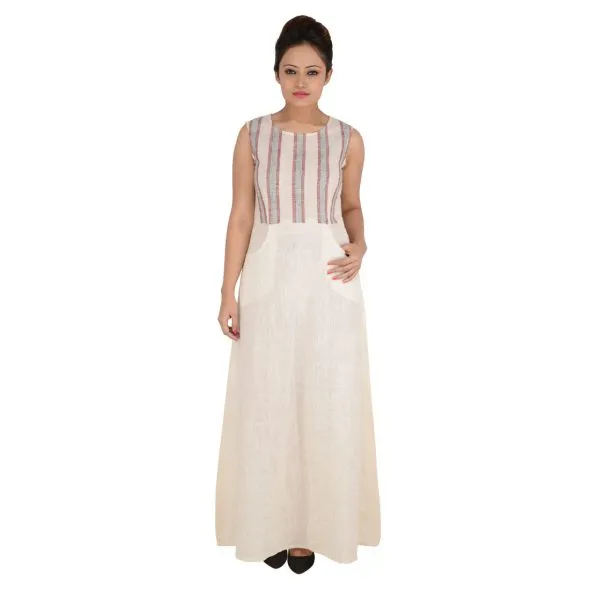
This Organic Cotton Maxi Dress utilizes handloom organic cotton as its primary raw material, significantly reducing the environmental impact associated with conventional cotton farming. Manufacturing processes are largely manual, minimizing energy consumption compared to industrial textile production. With proper care, the product offers an extended lifespan, and its natural fibers are biodegradable at end-of-life, contributing to a circular economy model.
| Lifecycle Stage | Impact | Notes |
|---|
| Raw Materials | very-high | Organic cotton cultivation uses significantly less water and no synthetic pesticides/fertilizers compared to conventional cotton. |
| Manufacturing | high | Handloom production drastically reduces energy demand and machine-related emissions compared to power loom operations. |
| Packaging | low | Assumed use of minimal, recyclable, or compostable packaging materials in line with sustainable product ethos. |
| Transportation | medium | Impact depends on logistics from production site to marketplace and end-consumer; local sourcing reduces this significantly. |
| Usage Phase | medium | Washing and drying contribute to energy and water consumption, though cold water hand washing reduces this. |
| End-of-Life | high | Being 100% natural fiber and naturally dyed, the dress is biodegradable, returning nutrients to the earth. |