SKU
CTMFFAD02
Minimum Order
1 pieces
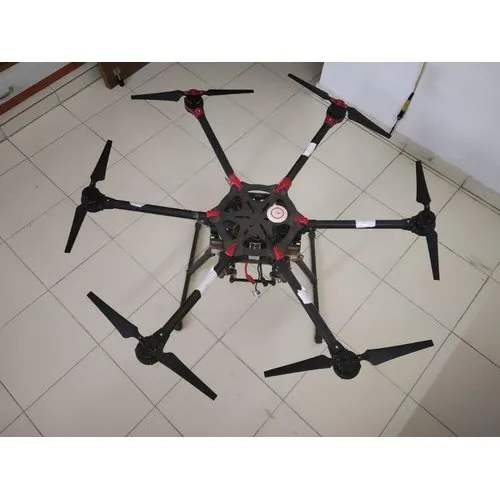
Plastic DJI S900 Drone:
Agricultural drones are soaring above fields, catalyzing a revolution in farming and forestation practices. Transitioning from traditional methods, these unmanned aerial vehicles bring unprecedented efficiency and sustainability to agricultural landscapes.
To commence, drones equipped with high-resolution cameras capture detailed images of fields, providing farmers with real-time insights into crop health and growth patterns. This data empowers farmers to make informed decisions, identify potential issues, and implement timely interventions, minimizing crop losses.
In the realm of precision agriculture, drones play a pivotal role in soil analysis. Utilizing sensors, these drones collect data on soil composition and moisture levels, enabling farmers to tailor irrigation and fertilization practices. This targeted approach not only conserves resources but also enhances overall crop yield.
In forestry, drones are instrumental in reforestation efforts. Tree-planting drones navigate challenging terrains, effortlessly dispersing seeds and saplings with precision. This accelerates the process of reforesting vast areas, contributing to biodiversity conservation and mitigating the impact of deforestation.
The active role of drones extends to crop monitoring during the growing season. Equipped with infrared sensors, they detect subtle changes in plant health, allowing farmers to address potential issues such as pests or diseases before they escalate. This proactive approach minimizes the need for chemical interventions, promoting environmentally friendly farming practices.
Plastic DJI S900 Drone: Furthermore, drones facilitate the efficient application of pesticides and fertilizers. Equipped with spray nozzles, they precisely target specific areas, reducing chemical usage and preventing overuse. This not only ensures the health of crops but also mitigates the environmental impact associated with excessive chemical applications.
In conclusion, agricultural drones are not just futuristic gadgets; they are transformative tools reshaping the agricultural and forestry landscape. Their versatility in crop monitoring, soil analysis, and reforestation endeavors underscores their pivotal role in fostering sustainability, efficiency, and innovation in farming and forestation practices.
No reviews yet. Be the first to review this product.
Ask a Question
Login to ask a question.
Robotics and drone technology offer several applications in Indian agriculture, and their adoption can lead to various environmental benefits. Here are some of the key applications and the environmental advantages of these technologies:
Robots equipped with vision systems and mechanical arms can be used to identify and remove weeds from fields. This reduces the need for chemical herbicides, minimizing soil and water contamination.
Robotic harvesters can efficiently and accurately pick fruits and vegetables, reducing post-harvest losses and labor requirements. This leads to improved yield efficiency and reduced food waste.
Autonomous seeders and planters can precisely place seeds at the optimal depth and spacing, improving crop uniformity and reducing seed wastage.
🔒
Full Sustainability Report
Unlock the complete AI-powered lifecycle analysis — certifications, verdict, carbon comparison & more.
✅ Usage Phase impact
✅ End-of-Life data
✅ Key Highlights
✅ Certifications
✅ Final Verdict
🌿
Want Your Own Company ESG Report?
Generate a full BRSR-aligned ESG report for your organisation — AI-powered, Gemini-backed, with a CM Carbon Rating (A–E).
🔑 Login & Calculate ESG
Offers
No offers available for this product at the moment.
Contact the vendor for bulk order pricing: SkyViewer
Please contact the vendor directly for their specific return and shipping policies.