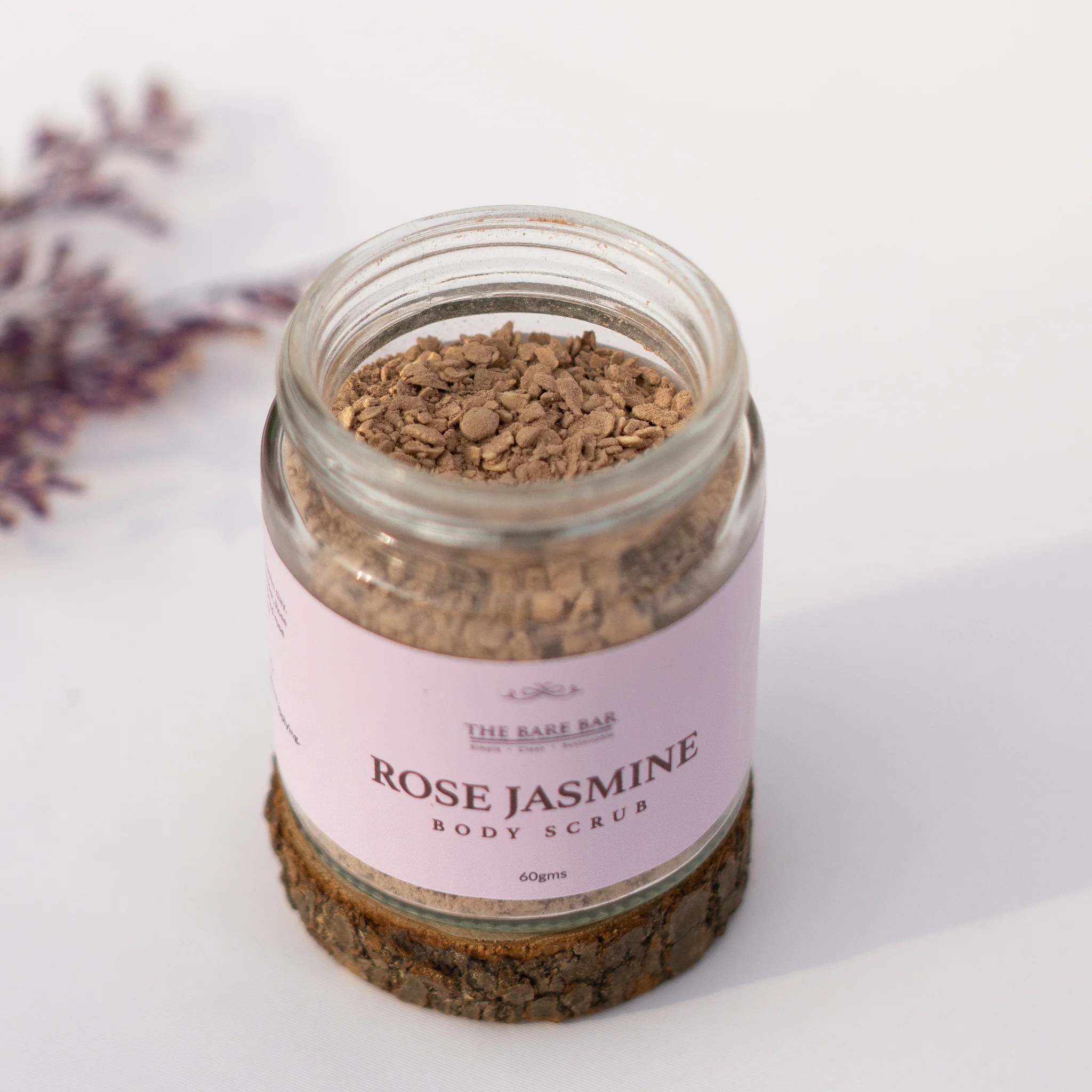
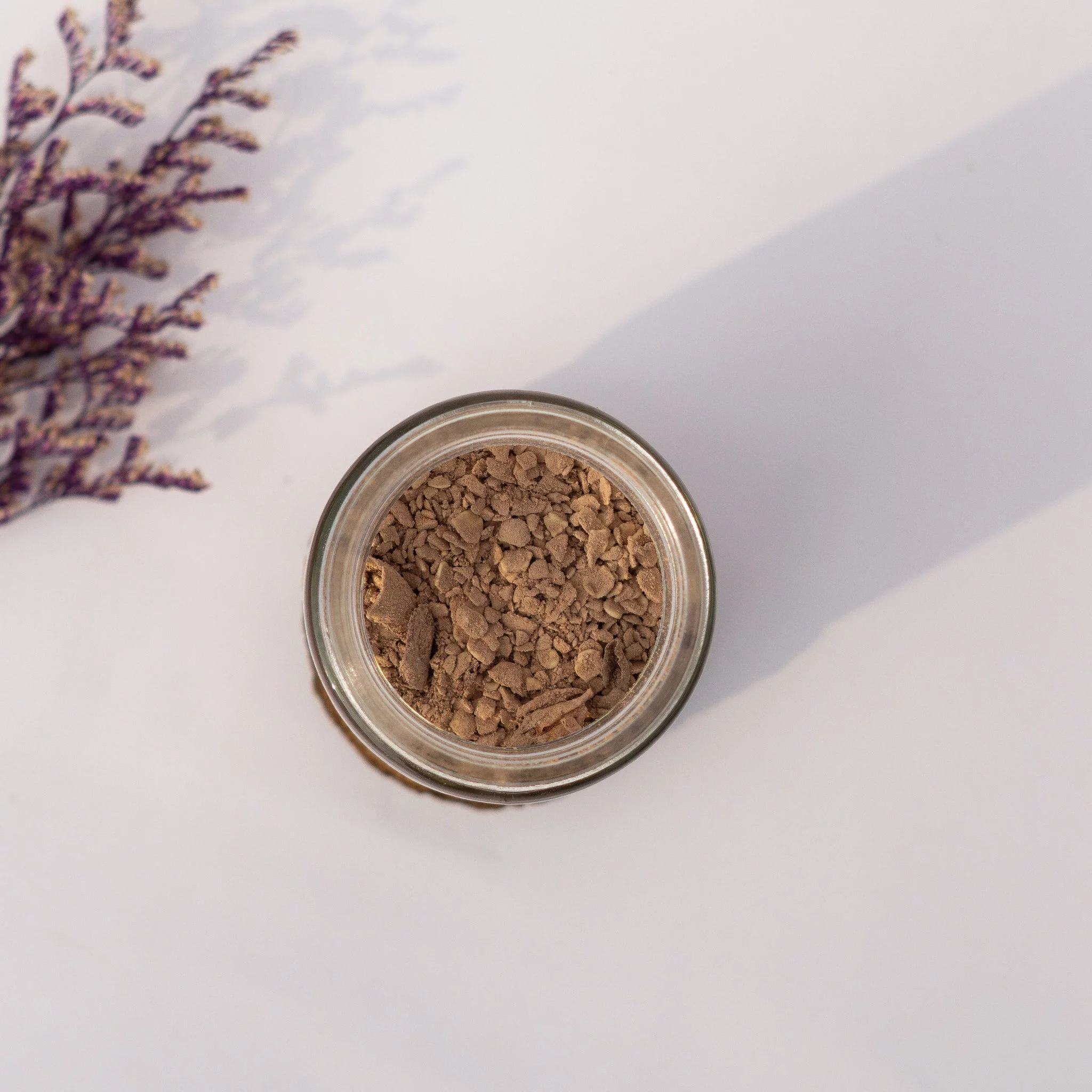
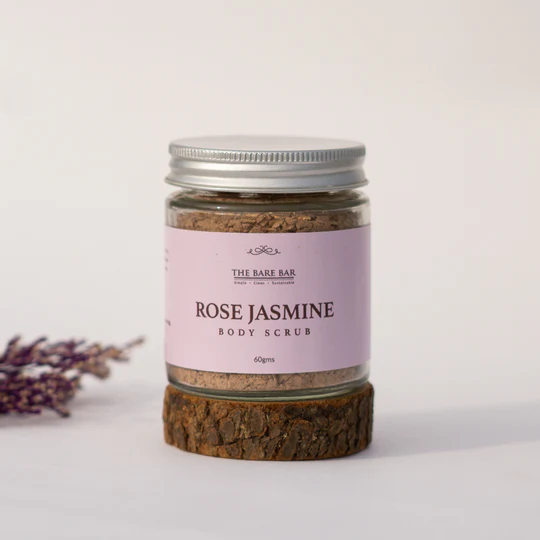
Ingredients
Rose petal powder
Pink kaolin clay
French green clay
Oatmeal scrub powder
Rose essential oil
Jasmine essential oil
Dried rose petals
Dried jasmine flower
How to use
Wet your body.
Apply the scrub powder and do gentle scrubbing.
If need moisten the scrub powder in between.
Wash off and apply a body moisturiser.
Benefits
Removes dead,dry skin.
Purifying,soothing.
For soft,smooth skin
No reviews yet. Be the first to review this product.
Ask a Question
Login to ask a question.
Sustainable Aspects
- Natural Ingredients:
- Rose and Jasmine Extracts: Both rose and jasmine are plants that can be cultivated sustainably. These extracts often require fewer synthetic chemicals compared to artificial fragrances, reducing environmental pollution.
- Exfoliating Agents: Many body scrubs use natural exfoliants like sugar, salt, or ground seeds, which are biodegradable and have minimal environmental impact compared to synthetic microbeads.
- Eco-friendly Production:
- Organic Farming: If the ingredients are sourced from organic farms, this reduces the use of synthetic fertilizers and pesticides, which are harmful to the environment and contribute to greenhouse gas emissions.
- Energy-efficient Manufacturing: Companies that use renewable energy sources in their production processes can significantly reduce their carbon footprint.
- Biodegradable Packaging:
- Recyclable or Compostable Packaging: Sustainable products often come in packaging made from recycled materials or materials that are easily recyclable or compostable, reducing waste and the environmental impact associated with plastic.
- Local Sourcing:
- Reduced Transportation Emissions: If the ingredients are sourced locally, this minimizes the carbon emissions associated with transportation, which can be a significant contributor to a product's overall carbon footprint.
Scientific Explanation
- Carbon Sequestration in Plants:
- Plants like roses and jasmine sequester carbon dioxide from the atmosphere during photosynthesis, contributing to carbon reduction. Sustainable farming practices enhance this effect by maintaining soil health and biodiversity.
- Life Cycle Assessment (LCA):
- Conducting an LCA can help identify and quantify the environmental impacts of a product throughout its life cycle—from raw material extraction to production, distribution, use, and disposal. Sustainable products often have a favorable LCA profile due to eco-friendly practices and materials.
References
- Natural Ingredients and Sustainability:
- "Natural Ingredients in Cosmetics: Regulatory and Sustainability Considerations," Journal of Cosmetic Science, 2019. This article discusses the benefits of using natural ingredients in personal care products, including reduced environmental impact.
- Organic Farming and Carbon Footprint:
- "Organic Agriculture and Carbon Sequestration: Possibilities and Constraints," Renewable Agriculture and Food Systems, 2012. This study highlights how organic farming practices contribute to carbon sequestration and reduce greenhouse gas emissions.
- Biodegradable Packaging:
- "The Environmental Impact of Packaging," International Journal of Life Cycle Assessment, 2020. This paper examines the environmental benefits of using biodegradable and recyclable packaging materials.
- Life Cycle Assessment (LCA):
- "Life Cycle Assessment of Personal Care Products: Environmental Impacts and Hotspots," Environmental Science & Technology, 2017. This research provides insights into the environmental impacts of personal care products and highlights key areas for improvement to reduce their carbon footprint.
🔒
Full Sustainability Report
Unlock the complete AI-powered lifecycle analysis — certifications, verdict, carbon comparison & more.
✅ Usage Phase impact
✅ End-of-Life data
✅ Key Highlights
✅ Certifications
✅ Final Verdict
🌿
Want Your Own Company ESG Report?
Generate a full BRSR-aligned ESG report for your organisation — AI-powered, Gemini-backed, with a CM Carbon Rating (A–E).
🔑 Login & Calculate ESG
Offers
No offers available for this product at the moment.
Contact the vendor for bulk order pricing: The Bare Bar
Please contact the vendor directly for their specific return and shipping policies.