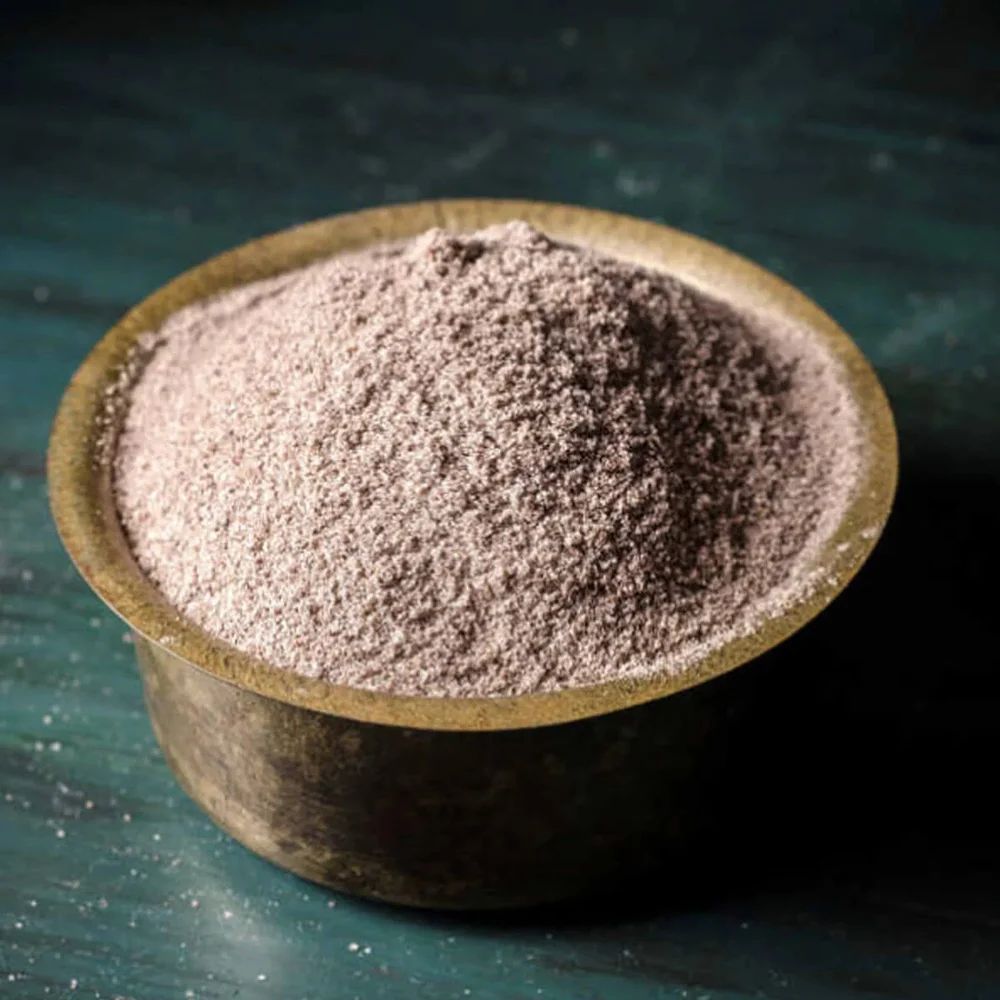
Ragi flour, made by stone-grinding
Finger Millet grains, is a traditional Indian staple with deep roots in rural and tribal diets. Cultivated organically, Ragi flour provides superior
nutritional benefits,
climate resilience, and
economic viability for smallholder farmers.
Ragi is grown primarily in
Karnataka, Tamil Nadu, Andhra Pradesh, Odisha, Chhattisgarh, and
Jharkhand, often under rainfed, organic conditions.
2. Environmental Sustainability
2.1 Water Use Efficiency
Ragi requires
minimal irrigation, making it a water-smart cereal.
- Ragi water requirement: 600–800 liters/kg
- Rice water requirement: 3,000–5,000 liters/kg
- Water savings: ≈ 80–85%
📌
Source: Indian Institute of Millets Research (IIMR), 2022
2.2 Low Carbon Footprint
Organic Ragi has a substantially lower carbon impact than conventional cereals.
- CO₂e emissions/kg:
- Rice: 1.6–2.0 kg
- Ragi (Organic): 0.6–0.9 kg
- GHG reduction: ~65%
📌
Source: FAO, 2021; ICRISAT Millets Emission Studies, 2023
2.3 Soil and Input Sustainability
- Requires zero synthetic fertilizers or pesticides in organic cultivation
- Improves soil organic carbon by 15–20% over 3–4 years
- Deep-root system enhances soil moisture retention
📌
Source: ICRISAT Soil Health Report, 2023
3. Nutritional Sustainability
3.1 Nutritional Profile (Per 100g of Organic Ragi Flour)
| Nutrient |
Amount |
% Daily Value (DV)* |
| Energy |
336 kcal |
17% |
| Carbohydrates |
72.6 g |
24% |
| Protein |
7.3 g |
15% |
| Total Fat |
1.3 g |
2% |
| Dietary Fiber |
11.5 g |
46% |
| Calcium |
344 mg |
34% |
| Iron |
3.9 mg |
22% |
| Magnesium |
137 mg |
34% |
📌
Source: National Institute of Nutrition (NIN), 2023
*Based on a 2,000 kcal/day diet
3.2 Key Health Benefits
- Calcium-rich: Contains 3x more calcium than milk – crucial for bone health
- Gluten-free: Ideal for celiac disease and gluten intolerance
- Low Glycemic Index (~50–55): Aids in blood sugar control
- High polyphenol and antioxidant content: Helps in weight management, heart health, and oxidative stress
📌
Source: NIN Hyderabad; Journal of Food Science and Technology, 2022
4. Economic Sustainability
4.1 Farmer Economics
- Input cost reduction: ~35–45% in organic Ragi farming
- Retail price of organic Ragi flour: ₹90–130/kg
- Profit margin increase: ~30–35% over conventional cereals
- Yield: 1.3–2.5 tons/ha under rainfed conditions
📌
Source: APEDA Organic Millet Report, 2023
4.2 Employment & Value Addition
- Processing Ragi into flour increases product shelf-life by 300%
- Creates 30–40% more rural employment (cleaning, grinding, packaging)
- Women-led SHGs involved in flour milling report 40% higher income
📌
Source: Ministry of Women & Child Development, 2022
5. Climate Resilience & Agroecology
- Grows in semi-arid and drought-prone zones
- Matures in 100–120 days
- Resistant to pests, salinity, and erratic rainfall
- Enhances climate-resilient food security
📌
Source: FAO, 2023 – Millets for Climate Adaptation
6. Certification & Organic Standards
Organic Ragi flour is eligible for the following certifications:
- ✅ NPOP (India) – National Programme for Organic Production
- ✅ PGS-India – Participatory Guarantee System
- ✅ Jaivik Bharat – FSSAI’s Organic India label
- ✅ USDA Organic & EU Organic – for international exports
📌
Source: APEDA & FSSAI Guidelines, 2023
7. Sustainability Scorecard
| Sustainability Indicator |
Organic Ragi Flour Rating |
| Water Use Efficiency |
★★★★★ |
| Carbon Emissions Reduction |
★★★★☆ |
| Soil Health & Biodiversity |
★★★★★ |
| Nutritional Density |
★★★★★ |
| Farmer Profitability |
★★★★☆ |
| Climate Resilience |
★★★★★ |
8. Conclusion
Organic Ragi Flour is a superior grain product that excels across sustainability dimensions:
- ✅ 85% less water use than rice
- ✅ ~65% lower carbon footprint
- ✅ High in calcium (344 mg) and fiber (11.5 g)
- ✅ 35% higher profit margin for organic producers
- ✅ Strong export potential and growing domestic demand
Promoting Organic Ragi Flour can enhance India’s position as a
global millet leader, align with
SDGs 2, 3, 12 & 13, and support the
post-2023 International Year of Millets movement.
📚 References
- Indian Institute of Millets Research (IIMR). (2022). Finger Millet Crop Guide
- National Institute of Nutrition (NIN). (2023). Indian Food Composition Tables
- ICRISAT. (2023). Soil and Emission Benefits of Millets Report
- FAO. (2023). Millets for Sustainable Agriculture and Climate Action
- APEDA. (2023). Organic Export and Millet Market Data
- Ministry of Agriculture & Farmers Welfare. (2023). Paramparagat Krishi Vikas Yojana (PKVY)
- Ministry of Women & Child Development. (2022). SHG Millet Value Chain Success Stories
- FSSAI. (2023). Jaivik Bharat and Organic Food Guidelines