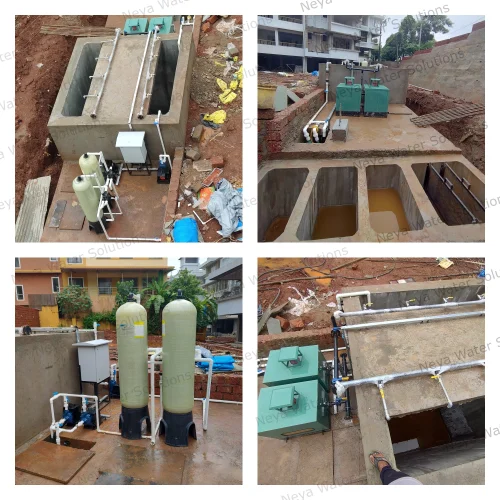
We have gained significant recognition through the development of highly sought-after Waste Water Treatment Plants. These plants are skillfully crafted using a range of materials while ensuring exceptional efficiency standards are maintained.
Wastewater treatment plants play a pivotal role in modern society, safeguarding the public from potential pollutants present in sewage and industrial effluents. Among the commonly adopted methods is biological treatment involving bacteria to decompose organic waste. Once treated, the wastewater is suitable for environmentally responsible reuse.
Typically comprising primary, secondary, and sometimes tertiary treatment stages, wastewater treatment plants employ various processes. Primary treatment often involves sedimentation tanks, secondary treatment engages microbiological decomposition, and advanced stages like microfiltration, ultrafiltration, ion exchange, and activated carbon treatment might follow.
The wastewater treatment process transpires through multiple stages. Settling tanks facilitate the initial settling of particles, followed by aeration tanks where sewage is acted upon by microorganisms. Subsequently, clarifiers separate remaining solid waste for disposal. This process, with a history spanning over 2,000 years, stands as a testament to its efficacy.
We extend our services to various sectors:
Residential Colonies and Apartments
Schools, Hostels, and Colleges
Hospitals
Hotels, Resorts, Restaurants, and Malls
Industrial Units
Other Institutional and Community Buildings, including large temples
Temporary Installations for Military and Paramilitary Forces
We have gained significant recognition through the development of highly sought-after Waste Water Treatment Plants. These plants are skillfully crafted using a range of materials while ensuring exceptional efficiency standards are maintained.
Wastewater treatment plants play a pivotal role in modern society, safeguarding the public from potential pollutants present in sewage and industrial effluents. Among the commonly adopted methods is biological treatment involving bacteria to decompose organic waste. Once treated, the wastewater is suitable for environmentally responsible reuse.
Typically comprising primary, secondary, and sometimes tertiary treatment stages, wastewater treatment plants employ various processes. Primary treatment often involves sedimentation tanks, secondary treatment engages microbiological decomposition, and advanced stages like microfiltration, ultrafiltration, ion exchange, and activated carbon treatment might follow.
The wastewater treatment process transpires through multiple stages. Settling tanks facilitate the initial settling of particles, followed by aeration tanks where sewage is acted upon by microorganisms. Subsequently, clarifiers separate remaining solid waste for disposal. This process, with a history spanning over 2,000 years, stands as a testament to its efficacy.
We extend our services to various sectors:
Residential Colonies and Apartments
Schools, Hostels, and Colleges
Hospitals
Hotels, Resorts, Restaurants, and Malls
Industrial Units
Other Institutional and Community Buildings, including large temples
Temporary Installations for Military and Paramilitary Forces
00 Reviews
5 Star
0
4 Star
0
3 Star
0
2 Star
0
1 Star
0
No reviews yet. Be the first to review this product.
Using recycled water can contribute to saving the Earth by conserving freshwater resources, reducing pollution, and promoting sustainable water management practices. Here's how:
Preservation of Ecosystems: When we reduce the amount of water taken from rivers, lakes, and other natural sources, we help maintain the health of these ecosystems. Conserving water resources can prevent the disruption of aquatic habitats and support biodiversity.
Less Strain on Infrastructure: Recycling water can alleviate the strain on existing water infrastructure by reducing the demand on traditional water sources. This can delay the need for costly infrastructure expansion and upgrades.
Drought Resilience: Recycled water can be particularly valuable during drought periods. Communities that have established recycled water systems are better prepared to maintain essential services and sustain economic activities even in water-scarce conditions.
🔒
Full Sustainability Report
Unlock the complete AI-powered lifecycle analysis — certifications, verdict, carbon comparison & more.