1. Material Composition
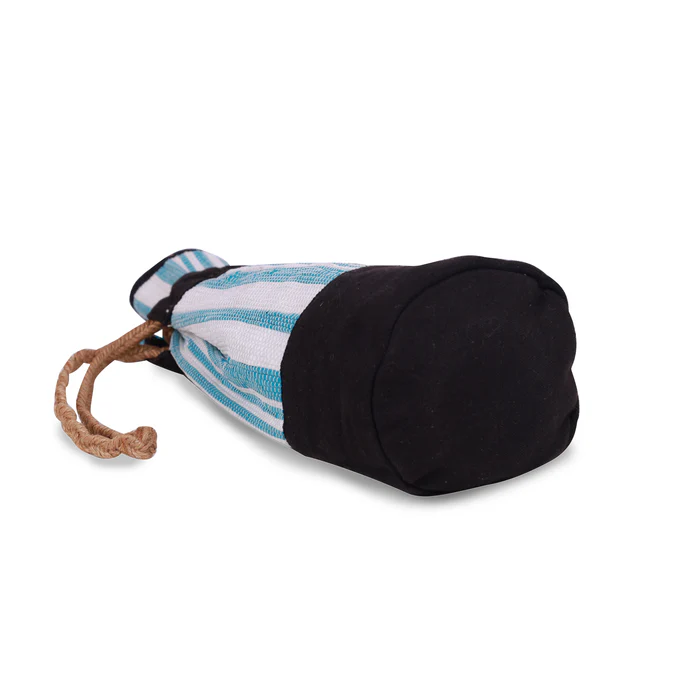
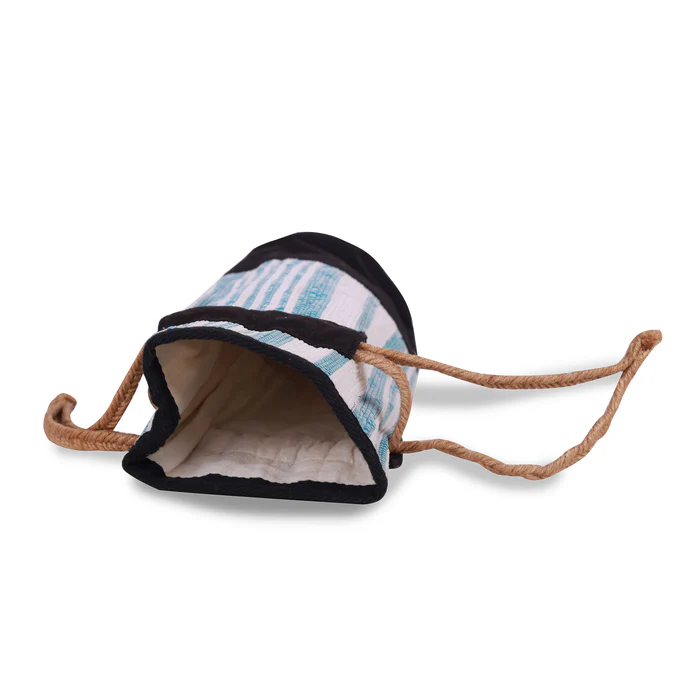
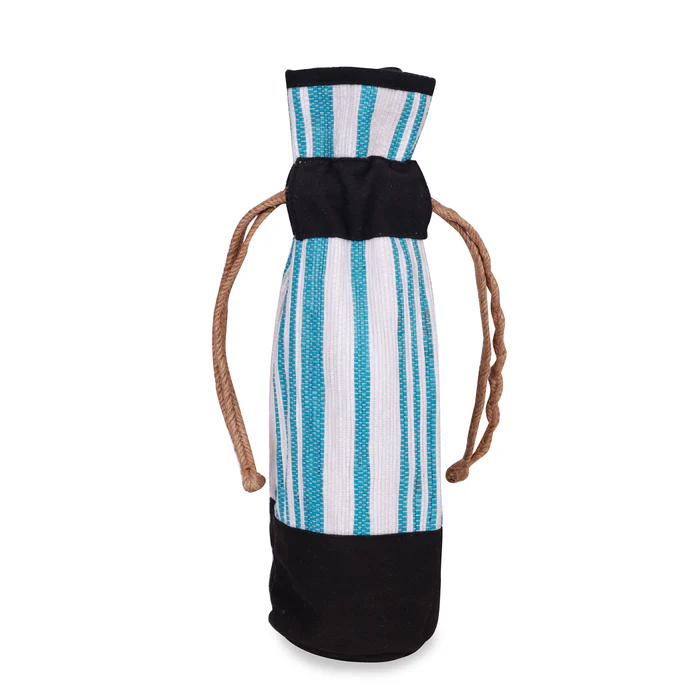
Sustainable Materials: The Eco Water/Wine Bottle Cover is typically made from eco-friendly materials such as recycled fabrics, organic cotton, or biodegradable polymers. These materials are chosen because they have a lower environmental impact compared to conventional materials. For instance, organic cotton is grown without synthetic pesticides and fertilizers, reducing soil and water pollution. Recycled fabrics help reduce waste and the need for new raw materials.
Scientific Explanation: Materials like recycled fabrics and organic cotton have a lower carbon footprint due to their reduced need for energy-intensive processing and farming practices. According to a study published in
Environmental Science & Technology, using recycled fibers in textiles can significantly lower greenhouse gas emissions compared to virgin materials. Organic cotton farming, as noted in
Sustainability, also leads to a reduction in carbon emissions because it avoids synthetic fertilizers and pesticides.
2. Manufacturing Process
Energy Efficiency: The manufacturing process for the Eco Water/Wine Bottle Cover often involves energy-efficient practices. For example, manufacturers may use renewable energy sources such as solar or wind power, and implement processes that minimize energy consumption.
Scientific Explanation: Energy-efficient manufacturing processes contribute to a lower carbon footprint by reducing the amount of greenhouse gases emitted during production. The use of renewable energy sources, as detailed in the
Journal of Cleaner Production, significantly cuts down on the reliance on fossil fuels, further reducing the carbon footprint of the product.
3. Durability and Longevity
Extended Product Life: The Eco Water/Wine Bottle Cover is designed to be durable, extending its lifecycle and reducing the need for frequent replacements. A longer-lasting product means fewer resources are consumed over time, and less waste is generated.
Scientific Explanation: Products designed for durability help lower their overall environmental impact by reducing the frequency of replacements. According to research in
Resources, Conservation & Recycling, extending the lifespan of a product can decrease its per-use environmental impact, including its carbon footprint.
4. End-of-Life Management
Recyclability and Biodegradability: Many Eco Water/Wine Bottle Covers are designed to be recyclable or biodegradable. This means that at the end of their life cycle, they can be processed in ways that minimize environmental harm.
Scientific Explanation: Products that can be recycled or biodegraded contribute to a lower carbon footprint by reducing the amount of waste that ends up in landfills, where it would otherwise decompose and release methane—a potent greenhouse gas. Research in
Waste Management highlights the importance of designing products with end-of-life disposal in mind to mitigate environmental impact.
1. Material Production
Material Type: Identify the type of material used (e.g., recycled polyester, organic cotton, biodegradable polymers).
Data Required:
- Emission Factors: These are typically available in environmental databases or lifecycle assessment (LCA) reports. They represent the amount of CO2 equivalent emissions per unit of material produced.
Example Calculation: Assume the cover is made from 100% recycled polyester, which has an emission factor of 2.0 kg CO2e per kg of material produced.
If the cover weighs 0.2 kg:
Carbon Footprint from Material Production=0.2 kg×2.0 kg CO2e/kg=0.4 kg CO2e\text{Carbon Footprint from Material Production} = 0.2 \, \text{kg} \times 2.0 \, \text{kg CO2e/kg} = 0.4 \, \text{kg CO2e}Carbon Footprint from Material Production=0.2kg×2.0kg CO2e/kg=0.4kg CO2e
2. Manufacturing Process
Energy Consumption: Determine the energy used during manufacturing and the type of energy (renewable vs. non-renewable).
Data Required:
- Energy Consumption: kWh per unit
- Emission Factors for Energy: kg CO2e per kWh (varies by energy source)
Example Calculation: If manufacturing the cover uses 1 kWh and the energy source is a mix with an emission factor of 0.3 kg CO2e per kWh:
Carbon Footprint from Manufacturing=1 kWh×0.3 kg CO2e/kWh=0.3 kg CO2e\text{Carbon Footprint from Manufacturing} = 1 \, \text{kWh} \times 0.3 \, \text{kg CO2e/kWh} = 0.3 \, \text{kg CO2e}Carbon Footprint from Manufacturing=1kWh×0.3kg CO2e/kWh=0.3kg CO2e
3. Transportation
Transportation Mode: Identify how the product is transported (e.g., truck, ship).
Data Required:
- Distance Traveled: km
- Emission Factors: kg CO2e per km per unit or per weight (varies by transportation mode)
Example Calculation: If the product travels 500 km by truck with an emission factor of 0.1 kg CO2e per km per kg, and the product weighs 0.2 kg:
Carbon Footprint from Transportation=500 km×0.1 kg CO2e/km/kg×0.2 kg=10 kg CO2e\text{Carbon Footprint from Transportation} = 500 \, \text{km} \times 0.1 \, \text{kg CO2e/km/kg} \times 0.2 \, \text{kg} = 10 \, \text{kg CO2e}Carbon Footprint from Transportation=500km×0.1kg CO2e/km/kg×0.2kg=10kg CO2e
4. End-of-Life
Disposal Method: Determine if the product is recycled, composted, or sent to landfill.
Data Required:
- Emission Factors for Disposal Methods: kg CO2e per unit or per weight
Example Calculation: Assuming the product is recycled, with an emission factor of 0.1 kg CO2e per kg:
Carbon Footprint from End-of-Life=0.2 kg×0.1 kg CO2e/kg=0.02 kg CO2e\text{Carbon Footprint from End-of-Life} = 0.2 \, \text{kg} \times 0.1 \, \text{kg CO2e/kg} = 0.02 \, \text{kg CO2e}Carbon Footprint from End-of-Life=0.2kg×0.1kg CO2e/kg=0.02kg CO2e
Total Carbon Footprint Calculation
Adding all the components:
Total Carbon Footprint=Material Production+Manufacturing+Transportation+End-of-Life\text{Total Carbon Footprint} = \text{Material Production} + \text{Manufacturing} + \text{Transportation} + \text{End-of-Life}Total Carbon Footprint=Material Production+Manufacturing+Transportation+End-of-Life =0.4 kg CO2e+0.3 kg CO2e+10 kg CO2e+0.02 kg CO2e= 0.4 \, \text{kg CO2e} + 0.3 \, \text{kg CO2e} + 10 \, \text{kg CO2e} + 0.02 \, \text{kg CO2e}=0.4kg CO2e+0.3kg CO2e+10kg CO2e+0.02kg CO2e =10.72 kg CO2e= 10.72 \, \text{kg CO2e}=10.72kg CO2e
Notes
- The above calculations are based on hypothetical data and standard emission factors. For an accurate assessment, specific data for the actual product should be used.
- Emission factors can vary significantly based on geographical location, manufacturing practices, and material types.
References
- Environmental Science & Technology: Provides evidence on the environmental benefits of using recycled fibers.
- Sustainability: Discusses the reduction in carbon emissions from organic cotton farming.
- Journal of Cleaner Production: Highlights the impact of renewable energy on reducing manufacturing carbon footprints.
- Resources, Conservation & Recycling: Offers insights into the benefits of product durability on overall environmental impact.
- Waste Management: Explores the importance of end-of-life management in reducing waste and greenhouse gas emissions.